Home/Blogs & Insights/Why Some Websites Get Cited by AI and Others Don't: Building Citation-Worthy Authority
AI Search Optimization
Why Some Websites Get Cited by AI and Others Don't: Building Citation-Worthy Authority
Citation visibility in AI search is broader than ranking first on Google. Learn the Citation-Worthiness Equation, the difference between ranking authority and citation utility, and what makes information worth referencing.
Vince Beekel
Aug 14, 202612 min read
Table of Contents
Two companies in the same industry publish content on the same topic. One gets cited by AI search platforms regularly. The other never appears. The difference is rarely luck, and it is not a secret technical trick the cited company figured out. It comes down to whether the content provides something worth referencing, and whether the business has built enough authority for a generative system to trust it as a source.
Citation visibility in AI search is broader than ranking first on Google. A page can rank well organically and still never get cited by a generative system. A page can get cited without ranking first. Understanding why requires separating two related but distinct concepts: ranking authority and citation utility. This article explains the difference, what makes information worth citing, and what businesses can realistically do to strengthen their authority.
If you are new to the broader framework, start with our complete guide to Multi-Engine Optimization. For a comparison of the optimization disciplines, read SEO vs. AEO vs. GEO vs. AIO. This article focuses specifically on citation authority.
What Makes a Website Citation-Worthy?
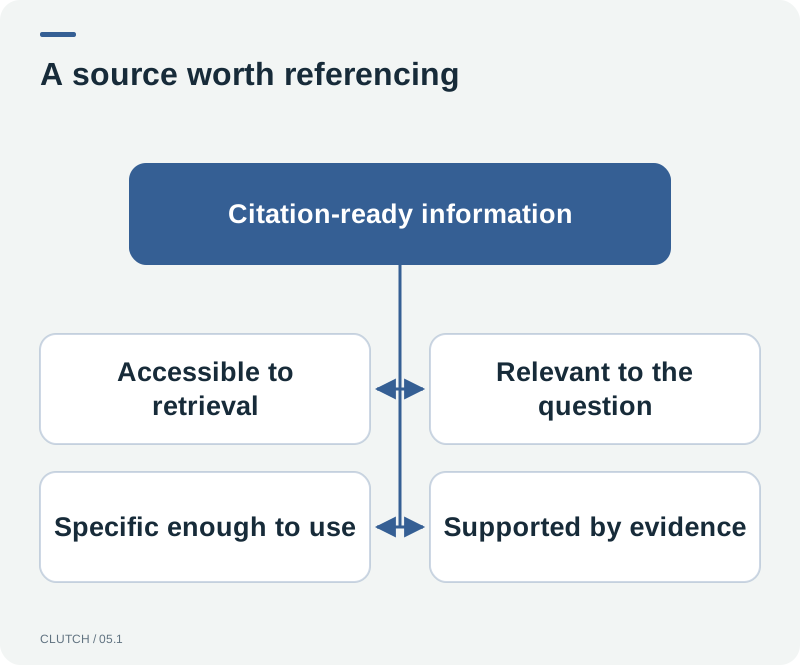
A website becomes citation-worthy when it provides information that is accessible, relevant, specific, well-supported, authoritative, corroborated, and current. Generative systems that synthesize answers from multiple sources tend to select content that offers precise, useful, verifiable information rather than vague or duplicated material. No single factor guarantees citation, but together these qualities improve the conditions under which a source is likely to be referenced.
The key distinction is that citation-worthiness is about the utility of specific information, not just the overall strength of a domain. A generative system constructing an answer needs a passage that contains exactly the information required. If your page has that passage, clearly structured and well-supported, it becomes a candidate for citation regardless of whether it ranks first for a broad keyword.
Citation authority is built through accessible, relevant, specific, and well-corroborated information that generative systems can confidently reference.
The Citation-Worthiness Equation
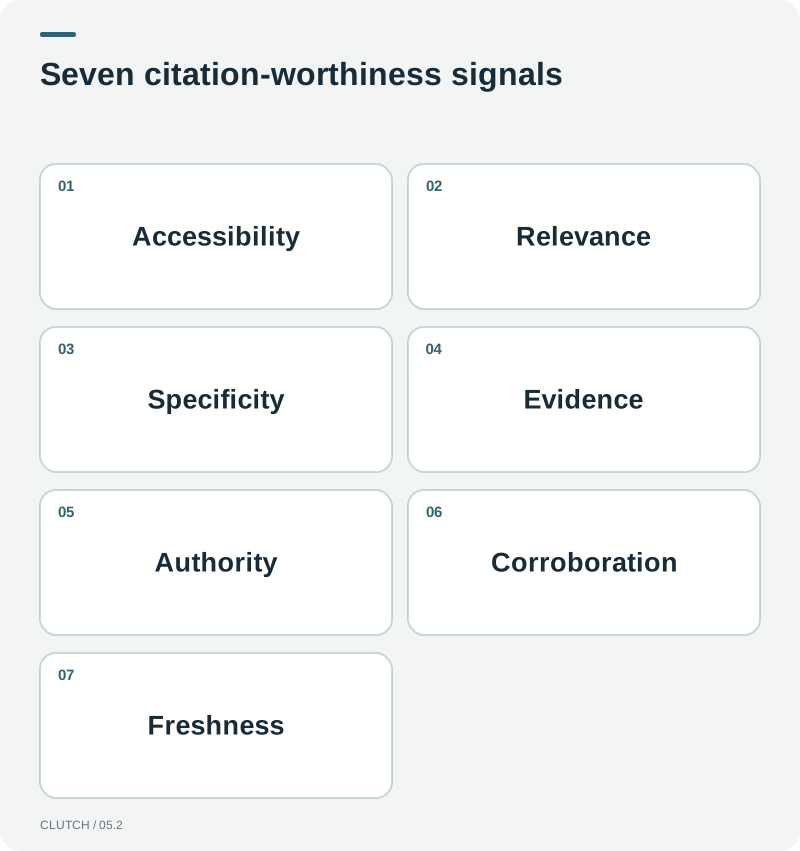
Clutch organizes the factors that influence citation potential into seven components. Each contributes independently, and weaknesses in one area can undermine the others. The equation is not a formula with fixed weights, because generative platforms do not publish their source-selection algorithms. It is a strategic framework for evaluating whether your content gives a system enough reasons to cite it.
The Citation-Worthiness Equation combines seven signals that together improve the likelihood of being referenced by generative systems.
Accessibility
If a generative system cannot crawl, read, and process your content, nothing else matters. Accessibility means your site is not blocking crawlers inappropriately, renders properly, loads reasonably fast, and has clean URL structures. Pages blocked by robots.txt, buried behind poor internal linking, or dependent on JavaScript that does not render for bots may be invisible to AI systems that retrieve information from the web.
Relevance
A system constructing an answer about a specific topic looks for sources that directly address that topic. Relevance means your content clearly and substantively covers the subject, not just mentions it in passing. A page that provides a detailed, focused treatment of a topic is more likely to be selected than one that touches on it briefly within a broader, less focused article.
Specificity
Generative systems need precise information to construct useful answers. Vague generalizations are less useful than specific data points, clear definitions, exact processes, and concrete examples. A page that says customer satisfaction improved significantly is less citation-worthy than one that says customer satisfaction improved 23 percent over six months following the implementation of automated follow-up. Specificity gives a system something exact to reference.
Evidence
Claims are more credible when they are supported. Evidence includes original research, case studies with verifiable details, expert commentary, proprietary data, and citations to authoritative sources. Content that makes unsupported assertions is less likely to be trusted by a system that needs to provide reliable answers. Evidence transforms an opinion into a citable fact.
Authority
Authority signals help a system determine whether your business is a legitimate, recognized entity worth referencing. This includes structured data, consistent business information, a coherent brand presence, and demonstrated expertise. A company that exists only on its own website with no external presence is harder for a generative system to confidently recommend than one with a recognized footprint across the web.
Corroboration
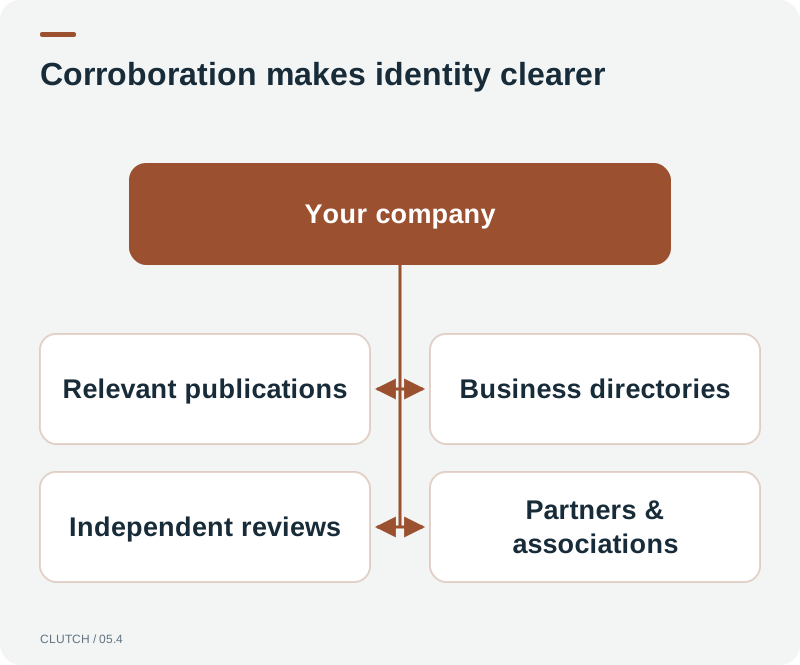
When a generative system encounters a business mentioned across multiple independent sources, it has more confidence that the business is real and credible. Corroboration includes mentions in industry publications, listings in relevant directories, reviews on recognized platforms, and citations in research or third-party content. A business corroborated across the web is a safer citation choice for a system that values reliability.
Freshness
Information changes. Outdated content is less likely to be cited because it may provide incorrect information. Freshness means periodically reviewing and updating important content to ensure it remains accurate, current, and relevant. This does not mean rewriting everything constantly. It means keeping your most valuable, most citable pages current.
Ranking Authority vs. Citation Utility
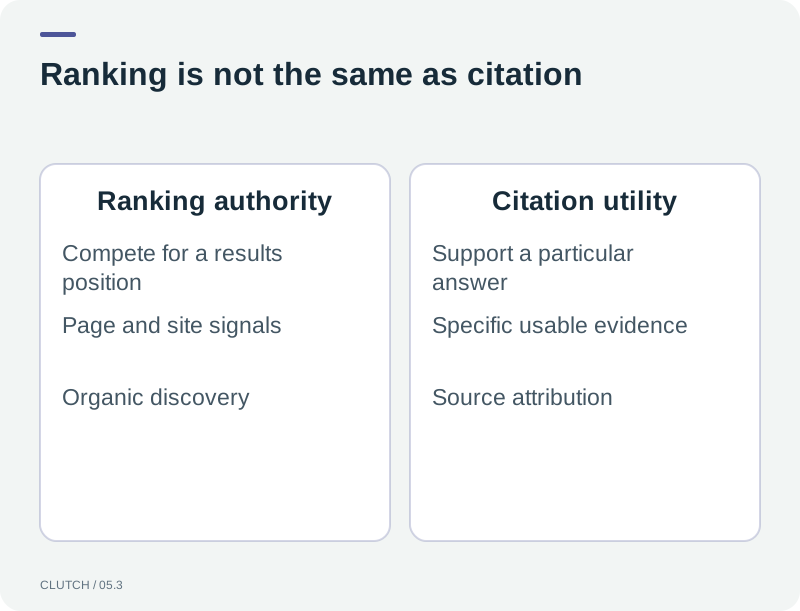
This is the distinction that most businesses miss. Ranking authority is about whether a page satisfies a traditional search query well enough to appear prominently in organic results. Citation utility is about whether a specific passage on that page contains precise, useful, supportable information that a generative system needs to construct an answer.
A page can have strong ranking authority because it comprehensively covers a topic, loads fast, and has good internal linking. But if it lacks specific, citable information, original data, or clear definitions, a generative system may not reference it even though it ranks well. Conversely, a page with a single, highly specific, well-supported passage may get cited even if it does not rank first for the broad keyword.
Ranking authority and citation utility overlap but are not identical. A page can rank well without being citation-worthy, and vice versa.
The overlap is significant. Strong ranking authority often correlates with citation utility because well-structured, comprehensive, useful content serves both purposes. But the correlation is not perfect. If your goal includes AI search visibility, you need to evaluate content not just for whether it ranks, but for whether it contains passages worth citing.
What Makes Information Worth Citing?
Certain types of information are inherently more citation-worthy because they provide something a generative system cannot easily find elsewhere or cannot construct from generic web content. Understanding these categories helps you produce content that offers genuine citation value.
Original statistics and proprietary data that exist nowhere else on the web
First-party research based on your own data, experience, or customer base
Expert commentary that provides analysis, interpretation, or perspective unavailable from generic sources
Detailed explanations that break down complex topics into clear, structured components
Unique frameworks or models that organize information in a way no other source does
Primary documentation of processes, specifications, or standards
Industry data aggregated or presented in a format that adds value beyond the raw numbers
Clear, precise definitions that establish the meaning of a term or concept
Case studies with verifiable details, specific outcomes, and transparent methodology
Useful comparison tables that organize information for quick reference
Detailed step-by-step processes that guide implementation
The common thread is information gain. If an article could be produced by anyone with the same AI tool and the same prompt, it offers little reason for a generative system to prefer it as a source. Content that contributes something original, specific, and verifiable gives a system a reason to cite it.
Do Backlinks Still Matter for AI Citations?
Backlinks remain a relevant authority signal, but their role in AI citation is less direct than in traditional SEO ranking. Generative systems do not simply cite the page with the most backlinks. They look for content that provides useful, specific information from a source that appears credible. Backlinks contribute to that credibility by signaling that other websites consider the source worth referencing.
The distinction matters. A page with thousands of backlinks but thin, generic content may not get cited because it offers no specific information worth referencing. A page with fewer backlinks but original research and precise data may get cited because it provides exactly what a generative system needs. Backlinks support authority, but citation utility drives selection.
Do Brand Mentions Matter?
Yes. Brand mentions across the web contribute to entity recognition and authority. When a generative system encounters a business mentioned in industry publications, news articles, directories, and review platforms, it builds confidence that the business is a legitimate, recognized entity. This does not mean you need to be featured in major publications to get cited. It means that building a genuine presence across the web strengthens the signals that support citation.
Unlinked brand mentions, where your company is named without a hyperlink, still contribute. The mention itself signals recognition. The consistency of your business information across these mentions, name, category, location, services, helps systems understand the entity clearly.
Third-party corroboration across publications, directories, reviews, and partners strengthens the authority signals that support AI citation.
Can a New Website Get Cited by AI?
Yes, though it is harder. A new website lacks the accumulated authority signals, backlinks, and third-party corroboration that established sites have. But if the new site publishes genuinely original, specific, well-structured information that a generative system needs, it can be cited. The barrier is higher because the system has less evidence that the source is credible, but the barrier is not insurmountable.
The practical path for a new site is to focus on information gain. Produce content that provides something unavailable elsewhere. Original research, expert analysis, proprietary frameworks, and detailed implementation guidance all give a system a reason to cite you despite a shorter track record. Pair that with consistent entity information and gradual third-party presence building.
Does Schema Increase Citation Chances?
Structured data helps systems understand your content and entity, which can improve the conditions for citation. It does not guarantee citation. Schema that accurately reflects visible page content contributes to entity clarity and information structure. Schema that does not match what a human reader sees provides no value and can be counterproductive.
The key is that schema supports understanding, not selection. A generative system may understand your content better because of structured data, but it will still only cite the content if it provides useful, specific information worth referencing. Schema is a best practice that supports clarity, not a citation guarantee.
Why Are Some Companies Repeatedly Mentioned by AI?
Companies that appear repeatedly in AI-generated responses typically share several characteristics. They have a strong, consistent presence across the web. They produce original, specific content that provides information unavailable elsewhere. They are corroborated by multiple independent sources. Their content is accessible, well-structured, and current. And they cover their topic area with enough depth that a generative system encounters them as a source regardless of the specific angle of the query.
Repeated mention is not the result of a single tactic. It is the cumulative effect of building authority, producing citation-worthy content, and maintaining a consistent presence across the web over time. Companies that invest in all of these areas tend to appear more frequently than those that focus on only one.
The AI Citation Authority Checklist
Use this checklist to evaluate whether your business has built enough authority to be considered a credible, citation-worthy source by generative systems.
Site is crawlable, renders properly, and loads fast for bots and humans
XML sitemap submitted, canonical tags configured, robots.txt allows access to important content
Structured data accurately reflects visible page content for business entity, services, and articles
Core content provides original information, data, or analysis unavailable elsewhere
Content includes specific data points, clear definitions, and precise explanations rather than vague generalizations
Claims are supported by evidence, sources, or first-hand experience
Business information is consistent across the website, directories, and review platforms
Third-party mentions exist in industry publications, directories, or relevant platforms
Review generation strategy in place on recognized platforms
Content organized into topical clusters with clear internal linking
Question-based content includes concise, direct answers of 40 to 80 words
Important content reviewed and updated periodically for accuracy and freshness
Author or contributor expertise is visible and credible
Content provides information gain rather than restating what competitors already say
How Citation Authority Connects to Business Results
Being cited by an AI system is valuable only if it leads to a business outcome. When a prospect reads an AI-generated answer that references your company and clicks through to your site, the experience they encounter determines whether they become a lead. Citation authority without conversion readiness produces visibility without revenue.
This is why Clutch connects authority building to the broader growth system. A smart website that loads quickly and guides visitors toward a clear next step. AI Sales Agents that respond instantly when a lead comes in. CRM automation that ensures no opportunity falls through the cracks. The citation strategy and the conversion strategy should be managed as one connected system. For more on building content that serves both citation and conversion, read our guide to building a content strategy for Google, AI search, and real customers.
Frequently Asked Questions
Frequently Asked Questions
Can you guarantee my business gets cited by ChatGPT or Google AI?
No. No legitimate provider can guarantee citation in any specific AI-generated response. Generative systems select sources through processes that are not fully transparent. What you can do is improve the conditions that make citation more likely by building accessible, specific, well-supported, and corroborated content that provides information worth referencing.
What is the difference between ranking authority and citation utility?
Ranking authority is about whether a page satisfies a traditional search query well enough to appear prominently in organic results. Citation utility is about whether a specific passage contains precise, useful, supportable information that a generative system needs to construct an answer. A page can rank well without being citation-worthy, and a citation-worthy passage may not rank first for a broad keyword.
Do backlinks help with AI citations?
Backlinks contribute to authority signals, which support credibility. But generative systems do not simply cite the page with the most backlinks. They look for content that provides useful, specific information. Backlinks support authority, but citation utility, the usefulness of the information itself, drives selection.
Can original research improve my AI search visibility?
Yes. Original research, proprietary data, and expert commentary provide information that generative systems cannot find elsewhere. This information gain gives a system a reason to cite your content. Content that merely restates what competitors already say offers little citation value.
Does adding schema markup guarantee AI citations?
No. Structured data helps systems understand your content and entity, which can improve the conditions for citation. It does not force any platform to reference your business. Schema should accurately reflect visible page content and be treated as a best practice, not a guarantee.
Can a new website get cited by AI search platforms?
Yes, though it is harder because a new site lacks accumulated authority signals. The practical path is to focus on information gain, producing original, specific, well-structured content that provides something unavailable elsewhere. Pair that with consistent entity information and gradual third-party presence building.
Why do some companies get mentioned repeatedly by AI systems?
Companies mentioned repeatedly typically have a strong, consistent web presence, produce original citation-worthy content, are corroborated by multiple independent sources, and cover their topic area with enough depth that a generative system encounters them as a source regardless of the specific query angle.
Can AI cite product or service pages?
Yes, if the page provides specific, useful information worth referencing. A service page that includes detailed explanations, clear definitions, original data, or precise specifications can be citation-worthy. A thin product page with only a price and a buy button is less likely to be cited because it offers little information a generative system needs.
Is your business citation-worthy?
Citation authority is built through accessible, specific, well-supported, and corroborated content that generative systems can confidently reference. Clutch Digital Development helps businesses evaluate their authority and build the content, presence, and technical foundation that supports AI search visibility.
Tags:#AI citations#AI search citations#how to get cited by AI#citation-worthy content#GEO citations#AI search authority#brand authority#source authority
READY TO PUT AI TO WORK?
What Could an AI Sales Agent Do for Your Business?
Every business handles leads differently. We'll look at your current sales process, lead volume, response times, follow-up, staffing, and opportunities to determine where an AI Sales Agent could have the biggest impact.
Search discovery expanded beyond a single results page. Multi-Engine Optimization is the framework for staying visible across organic search, AI answers, conversational platforms, and more without abandoning proven SEO fundamentals.
Confused by the alphabet soup of modern search optimization? This plain-English comparison breaks down SEO, AEO, GEO, and AIO, where they overlap, and what your business should prioritize.
There is no guaranteed switch for AI search visibility, but there is a practical set of things businesses can control. This implementation guide covers the AI Visibility Stack and step-by-step actions for being discovered and cited.