Home/Blogs & Insights/Google AI Overviews and AI Mode: What Business Owners Need to Know About the Future of Search
AI Search Optimization
Google AI Overviews and AI Mode: What Business Owners Need to Know About the Future of Search
Google integrated generative AI into its core search experience. Learn what AI Overviews and AI Mode are, how they differ, what Google has actually said, and what business owners should do about it.
Vince Beekel
Aug 7, 202611 min read
Table of Contents
Google has integrated generative AI into its core search experience, and the changes affect how businesses get discovered. Two features drive most of the conversation: AI Overviews and AI Mode. Business owners do not need to become AI engineers to respond effectively, but they do need to understand what these features are, how they differ, and what Google has actually said about how they work.
Much of the advice circulating about optimizing for Google AI search is speculative. Some of it contradicts Google's own documentation. This article focuses on what Google has stated publicly, what business owners should care about, and what SEO fundamentals still apply. For the broader framework, read our complete guide to Multi-Engine Optimization.
What Are Google AI Overviews?
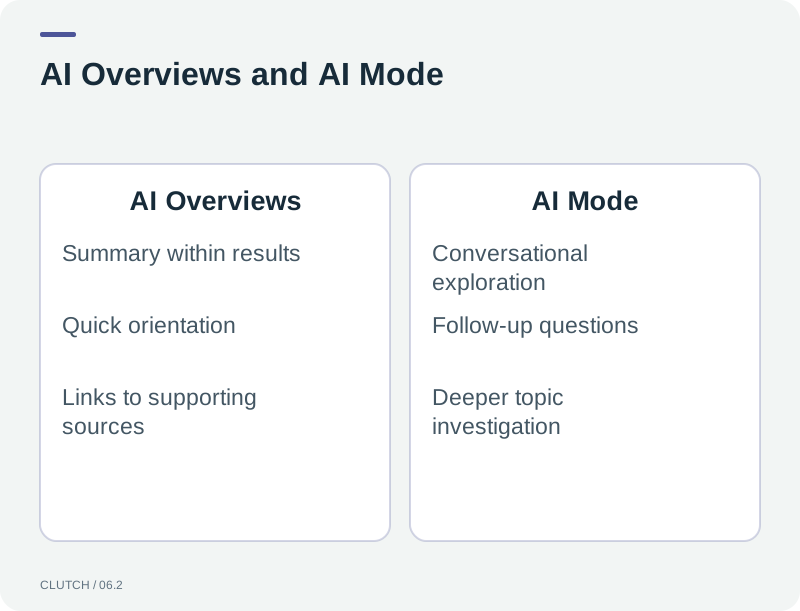
AI Overviews are AI-generated summaries that appear at the top of certain Google Search results pages. They synthesize information from multiple web sources to provide a concise answer to a query, often with links to the sources used. AI Overviews are designed to help users quickly understand a topic without having to click through multiple results. They appear for some queries and not others, and Google has stated that existing SEO fundamentals remain relevant for pages that appear in these experiences.
Google's Search Central documentation emphasizes that the same best practices that help content perform well in traditional search, helpful, people-first content, good technical foundations, and proper structured data, also apply to AI Overviews. There is no separate technical optimization system or special schema required simply to appear in them.
What Is Google AI Mode?
AI Mode is a more advanced AI-powered search experience that allows users to ask complex, multi-part questions and receive detailed, synthesized responses. Unlike AI Overviews, which provide a quick summary within the standard results page, AI Mode is designed for deeper exploration. It can break a complex query into related subtopics, explore multiple data sources, and construct a more comprehensive answer. Google has described using query fan-out techniques to explore related subtopics and data sources within this experience.
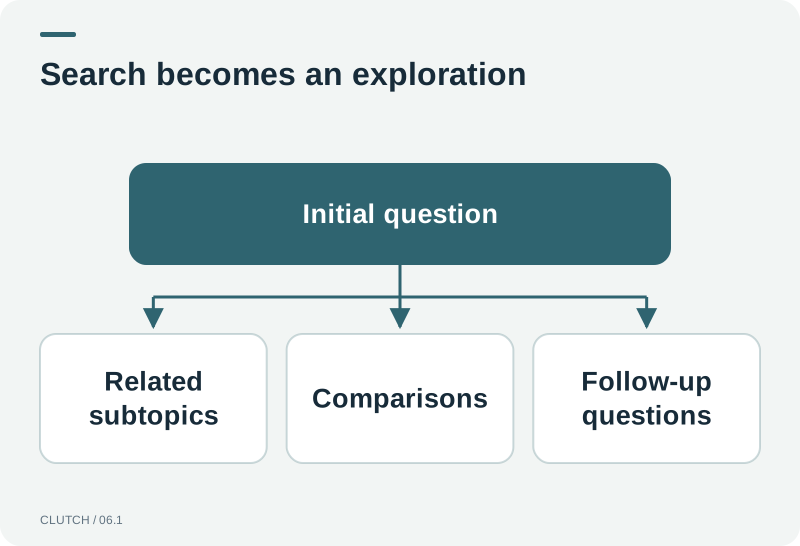
AI Mode represents a shift toward search as a conversational, exploratory process rather than a single query and a list of links. Users can ask follow-up questions, refine their inquiry, and go deeper into a topic within a single search session. This changes the nature of discovery, because a user who once typed a keyword and scanned results may now engage in a multi-turn conversation that shapes their understanding before they ever visit a website.
Google's AI search experiences expand traditional search into deeper, multi-layered exploration environments.
AI Overviews vs. AI Mode
The two features serve different purposes and create different user experiences. Understanding the distinction helps business owners prioritize appropriately.
Feature
AI Overviews
AI Mode
Purpose
Quick AI-generated summary at the top of search results
Deep, conversational exploration of complex questions
User Experience
Appears within standard results page
Dedicated AI search experience with follow-up capability
Query Type
Informational and straightforward queries
Complex, multi-part, and exploratory queries
Depth
Concise summary with supporting links
Detailed synthesis exploring multiple subtopics
Supporting Links
Links to sources used in the summary
Links to sources explored during query fan-out
Measurement Considerations
Impressions and clicks from overview links
Broader attribution across multi-turn sessions
AI Overviews provide quick summaries within standard results. AI Mode enables deeper, conversational exploration.
How Query Fan-Out Works
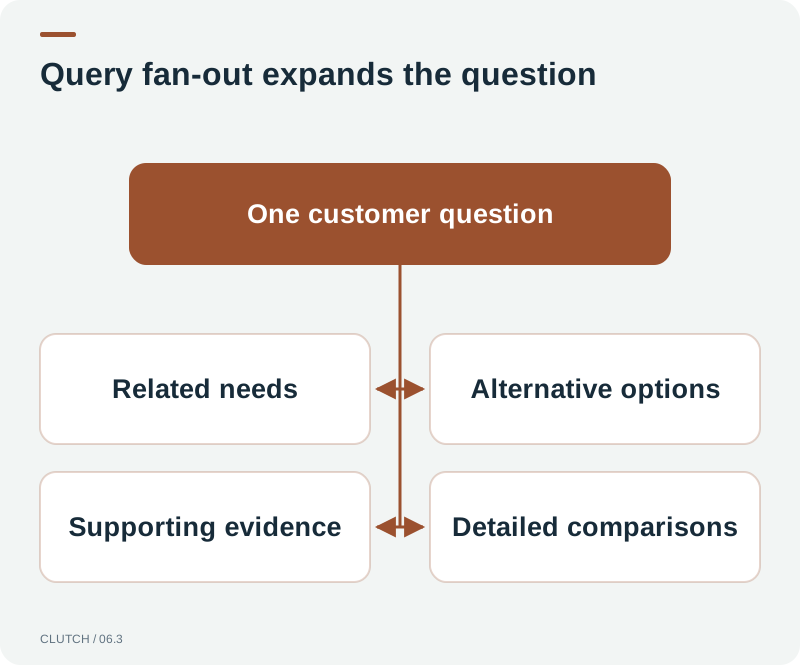
Query fan-out is a technique Google has described using in AI Mode. When a user asks a complex question, the system may break that question into related subtopics or sub-queries, explore multiple data sources for each, and then synthesize the results into a comprehensive answer. This means a single user question can trigger exploration across many pages and topics.
For businesses, this has an important implication. Your content may be discovered not just because it directly addresses the user's original query, but because it addresses one of the subtopics the system explores during fan-out. This reinforces the value of topical depth. A business that covers its subject area thoroughly across multiple connected pages provides more entry points for discovery than one with a single, narrow page.
Query fan-out explores related subtopics and data sources, creating more discovery entry points for businesses with topical depth.
The Four Business Impacts of AI Search
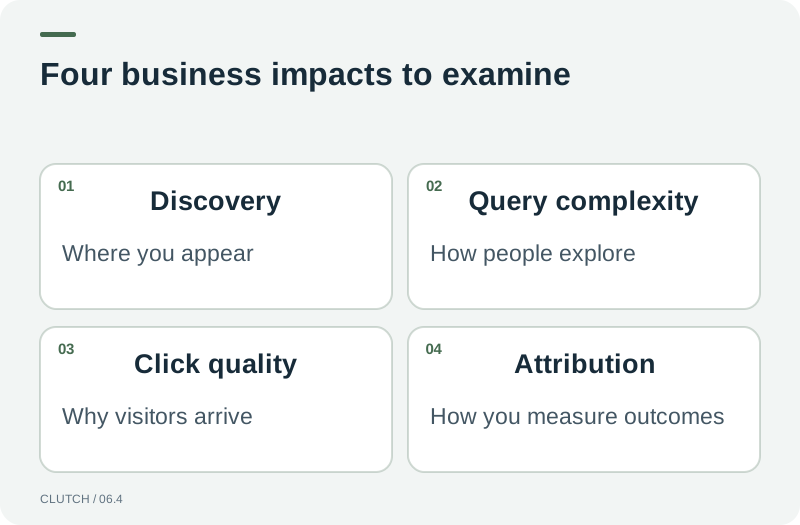
Clutch organizes the business implications of Google's AI search experiences into four connected impacts. Each affects how companies should think about visibility, measurement, and strategy.
The Four Business Impacts of AI Search: discovery, query complexity, click quality, and attribution.
1. Discovery
How customers discover companies and information is changing. A user may encounter an AI-generated answer before they see organic results. They may explore a topic through a conversational session rather than a single search. Discovery is no longer limited to scanning a list of links. It includes being referenced within an AI summary, appearing as a supporting link, or being surfaced during query fan-out.
2. Query Complexity
Users can now ask more detailed and multi-part questions. Instead of searching HVAC repair cost, a user might ask what factors affect HVAC repair cost and when should I replace instead of repair. This shift toward complex queries rewards content that addresses nuanced questions thoroughly rather than content optimized for a single keyword.
3. Click Quality
Fewer simplistic assumptions about traffic volume alone are valid. If a user gets a comprehensive answer from an AI Overview, they may not click through to any website. But when they do click, the click may be higher intent because the AI answer has already filtered for relevance. Businesses need to measure what visitors actually do after arriving, not just count clicks.
4. Attribution
Businesses need broader visibility measurement than simply keyword position. A user may discover a company through an AI answer, visit the site directly later, and convert without a traceable click from the AI result. Attribution models need to account for assisted discovery, branded search increases, and multi-touch journeys rather than relying solely on last-click keyword attribution.
Does Traditional SEO Still Matter for AI Search?
Yes. Google has stated that existing SEO fundamentals remain relevant for AI Overviews and AI Mode. There are not separate technical requirements or special schema required simply to appear in these experiences. Pages generally need to be indexed and eligible to appear in Google Search. The same technical accessibility, content quality, structured data, and internal linking that support traditional organic performance also support visibility in AI-powered experiences.
This is an important point because much of the advice about AI search optimization implies that businesses need an entirely new technical approach. Google's own documentation does not support that claim. The fundamentals remain foundational. What has changed is the discovery environment, not the underlying requirements for being crawled, indexed, and understood.
Can Businesses Optimize Specifically for AI Mode?
There is no separate optimization system for AI Mode. Google has not published special technical requirements for appearing in AI Mode beyond the fundamentals that apply to Google Search generally. What businesses can do is ensure their content is accessible, well-structured, and comprehensive enough to be useful when the system explores related subtopics during query fan-out.
The practical approach is to focus on topical depth and content quality. Cover your subject area thoroughly across connected pages. Provide clear, specific, well-supported information. Use structured data that accurately represents your content. Maintain strong technical foundations. These are the same practices that support traditional SEO, and they are what Google states remain relevant for AI-powered experiences.
How to Measure AI Search Visibility
Measuring visibility in Google's AI search experiences requires looking beyond traditional ranking reports. Google Search Console may provide performance data related to AI experiences, depending on current reporting capabilities. Business owners should verify what Search Console currently reports by checking the official documentation, as Google's reporting features evolve over time.
Beyond Search Console, track referral traffic from AI-related domains in Google Analytics. Monitor branded search volume for increases that may indicate AI-driven discovery. Watch for changes in organic traffic patterns that could reflect shifts in how users interact with search results. Connect these signals to conversion data to understand the actual business impact. For a comprehensive measurement framework, read our guide to the Multi-Engine Visibility Audit.
Do AI Overviews Decrease Website Traffic?
AI Overviews may reduce clicks for certain query types where the AI summary fully satisfies the user's information need. This is most likely for simple, factual queries where a quick answer is sufficient. For more complex, commercial, or decision-oriented queries, users are more likely to click through to websites for deeper information, comparison, or action.
The practical implication is that businesses should focus on content that serves complex intent rather than simple factual lookups. If your content only answers a question that an AI can answer from any source, it is more vulnerable to traffic reduction. If your content provides original analysis, detailed comparisons, expert guidance, or a clear path to action, it remains valuable even when an AI summary appears.
What Different Types of Businesses Should Do
The response to Google's AI search experiences varies by business type because discovery behavior and customer journeys differ.
Local service businesses should prioritize Google Business Profile optimization, local search visibility, review generation, and a website that converts phone calls and form submissions. AI search increasingly handles local queries, but the foundation starts with local SEO and conversion infrastructure.
Ecommerce businesses should focus on product page quality, structured data for products and offers, merchant center optimization, and content that addresses buying-stage questions. AI search may surface product comparisons and recommendations, so content that helps users evaluate options is increasingly valuable.
Professional and B2B service businesses should invest in topical authority through deep content clusters, expert commentary, and original research. Their audiences research extensively before contact, and AI search plays a growing role in that research phase. Content that demonstrates expertise and provides specific, citable information supports visibility throughout the buyer journey.
Frequently Asked Questions
Frequently Asked Questions
Do AI Overviews replace Google search results?
No. AI Overviews appear at the top of certain search results pages as AI-generated summaries, but traditional organic results remain. AI Overviews supplement the results page rather than replacing it entirely. They appear for some queries and not others, and users still click through to websites for deeper information, comparison, and action.
Does traditional SEO still matter for Google AI search?
Yes. Google has stated that existing SEO fundamentals remain relevant for AI Overviews and AI Mode. There are no separate technical requirements or special schema required. Pages need to be indexed and eligible to appear in Google Search. The same technical accessibility, content quality, and structured data that support traditional organic performance also support AI-powered experiences.
Can businesses pay to appear in AI Overviews organically?
No. AI Overviews are generated organically based on Google's assessment of web content. There is no paid placement within the AI-generated summary itself. Businesses can run search ads that appear alongside results, but organic appearance in AI Overviews is not something that can be purchased.
What is query fan-out?
Query fan-out is a technique Google has described using in AI Mode. When a user asks a complex question, the system may break it into related subtopics, explore multiple data sources for each, and synthesize the results. This means a single question can trigger exploration across many pages, creating more discovery entry points for businesses with topical depth.
Do AI Overviews decrease website traffic?
They may reduce clicks for simple factual queries where the AI summary fully satisfies the user. For complex, commercial, or decision-oriented queries, users are more likely to click through for deeper information. Businesses should focus on content that serves complex intent rather than simple factual lookups to remain valuable.
Does schema markup help with AI Overviews?
Structured data helps systems understand your content, which supports visibility. Google has not indicated that special schema is required for AI Overviews. Standard structured data that accurately represents visible page content remains a best practice. Schema supports understanding but does not guarantee appearance in AI-generated summaries.
How can I measure visibility in Google AI search?
Check Google Search Console for current AI-related reporting capabilities, as features evolve. Track referral traffic from AI-related domains in Google Analytics. Monitor branded search volume for increases that may indicate AI-driven discovery. Connect these signals to conversion data to understand business impact.
What should local businesses do about Google AI search?
Prioritize Google Business Profile optimization, local search visibility, review generation, and a website that converts. AI search increasingly handles local queries, but the foundation starts with local SEO and conversion infrastructure. Ensure your business information is consistent across the web and your content addresses local customer questions clearly.
Is your website prepared for Google's changing search experience?
Google's AI search experiences reward the same fundamentals that have always mattered: accessible, well-structured, helpful content. Clutch Digital Development helps businesses evaluate their readiness and build the technical, content, and conversion foundation that supports visibility across every search environment.
Tags:#Google AI Mode#Google AI Overviews#AI Overviews SEO#Google AI search optimization#AI Mode SEO#future of Google Search#Google generative search
READY TO PUT AI TO WORK?
What Could an AI Sales Agent Do for Your Business?
Every business handles leads differently. We'll look at your current sales process, lead volume, response times, follow-up, staffing, and opportunities to determine where an AI Sales Agent could have the biggest impact.
Search discovery expanded beyond a single results page. Multi-Engine Optimization is the framework for staying visible across organic search, AI answers, conversational platforms, and more without abandoning proven SEO fundamentals.
Confused by the alphabet soup of modern search optimization? This plain-English comparison breaks down SEO, AEO, GEO, and AIO, where they overlap, and what your business should prioritize.
There is no guaranteed switch for AI search visibility, but there is a practical set of things businesses can control. This implementation guide covers the AI Visibility Stack and step-by-step actions for being discovered and cited.