Home/Blogs & Insights/How to Get Your Business Found in ChatGPT, Google AI Mode, Gemini, Perplexity and AI Search
AI Search Optimization
How to Get Your Business Found in ChatGPT, Google AI Mode, Gemini, Perplexity and AI Search
There is no guaranteed switch for AI search visibility, but there is a practical set of things businesses can control. This implementation guide covers the AI Visibility Stack and step-by-step actions for being discovered and cited.
Vince Beekel
Aug 28, 202613 min read
Table of Contents
A prospect asks ChatGPT for a recommendation for a service like yours. Another searches Google AI Mode for a comparison. A third types a question into Perplexity and reads the synthesized answer with its cited sources. In each case, a decision is being shaped before the prospect ever visits your website. If your business is not part of the information these systems retrieve and reference, you are absent from a growing share of discovery moments.
There is no guaranteed switch that makes an AI system recommend your company. Generative platforms select sources through processes that are not fully transparent and that change over time. But there is a meaningful set of things businesses can control to improve the likelihood of being discovered, understood, and cited. This article is a practical implementation guide for that work.
If you are new to the broader concept, start with our complete guide to Multi-Engine Optimization. If you want to understand how the optimization disciplines compare, read SEO vs. AEO vs. GEO vs. AIO. This article focuses on what to actually do.
How Do Businesses Appear in AI Search?
Businesses appear in AI search results when generative systems can access their content, understand what the business is and does, and determine that it is a credible source worth referencing. This depends on technical accessibility, content quality, entity clarity, authority signals, and third-party corroboration. No single factor guarantees inclusion, but together they improve the conditions under which an AI system is likely to discover and cite a business.
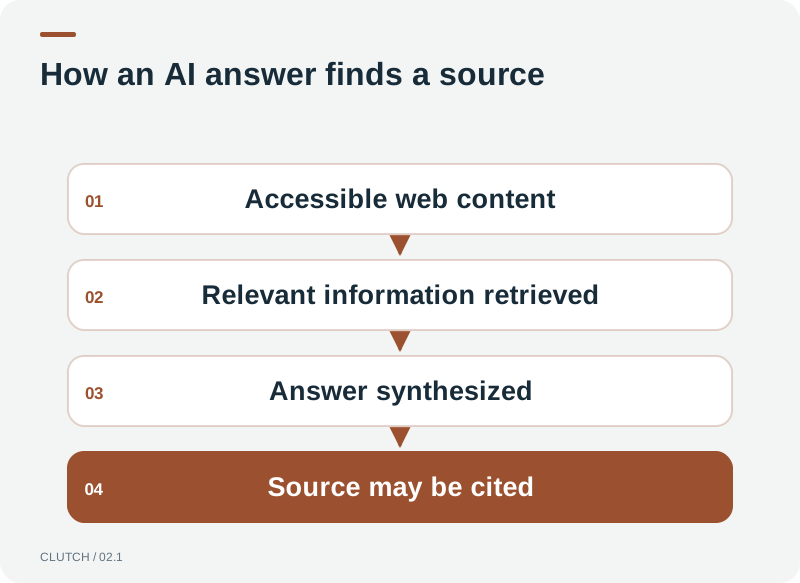
AI search platforms like ChatGPT, Google AI Mode, Gemini, and Perplexity generally retrieve information from the web, synthesize it, and present an answer with citations or source links. The specific retrieval and selection processes vary by platform and are not fully public. What is consistent across platforms is that they need to be able to find, read, and trust your content before they can reference it.
AI search platforms retrieve, synthesize, and cite web content. Being accessible and authoritative improves citation potential.
Can You Optimize a Website for ChatGPT?
You cannot directly optimize a website for ChatGPT the way you optimize for a traditional search ranking position. ChatGPT and similar conversational AI platforms do not operate as a ranked SERP where you compete for position one. What you can do is ensure your content is accessible, clearly structured, and authoritative enough that when a generative system retrieves information about your topic or category, your business is among the sources it can find and confidently reference.
The phrase people often search for is rank in ChatGPT. It is worth addressing directly because it reflects a real business concern. The practical answer is that you improve your chances of being cited by building genuine authority, producing original information, maintaining technical accessibility, and establishing third-party corroboration. These are the same fundamentals that support broader AI search visibility and traditional SEO.
The AI Visibility Stack
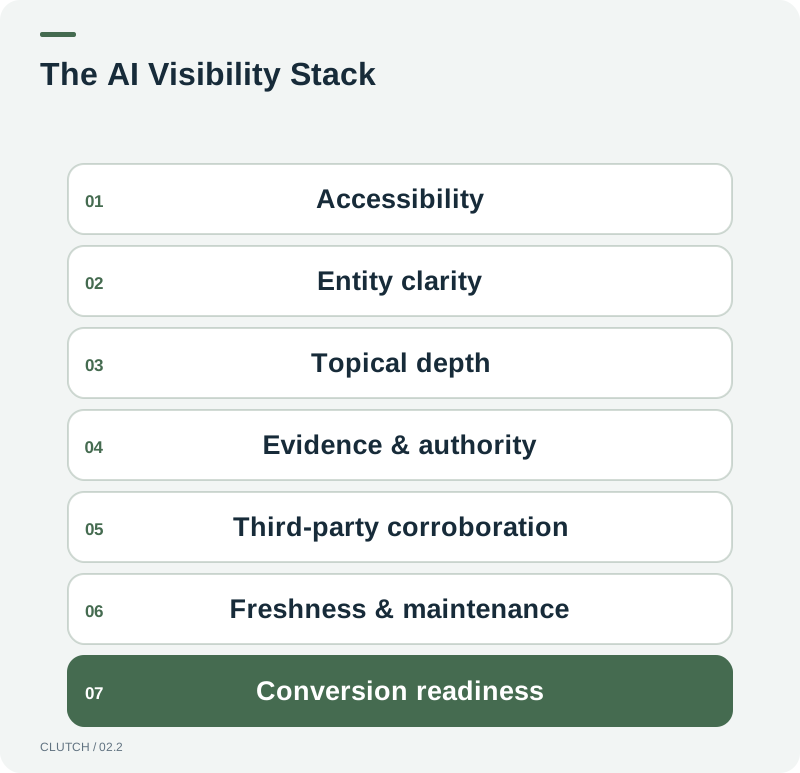
Clutch organizes AI search visibility work into seven layers. Each layer builds on the previous ones, and weaknesses in lower layers undermine the effectiveness of higher ones. The stack provides a practical sequence for implementation.
The AI Visibility Stack provides a layered approach to improving discovery and citation across AI search platforms.
Layer 1: Accessibility
AI systems that retrieve information from the web need to be able to crawl and read your content. This means your site is not blocking crawlers inappropriately, renders properly without requiring JavaScript execution that bots may not perform, loads reasonably fast, and has a clean URL structure. Your robots.txt file should allow access to important content. Your XML sitemap should be submitted and current. Canonical tags should be correctly configured to avoid duplicate content confusion.
If an AI crawler cannot access your pages, nothing else matters. The content will not be retrieved, will not be understood, and will not be cited. Start by confirming that your most important pages are accessible to web crawlers and that there are no technical barriers preventing retrieval.
Layer 2: Entity Clarity
Once content is accessible, the system needs to understand what entity it is dealing with. Is this a business? What type? Where is it located? What services does it offer? Who is behind it? Entity clarity means making this information unambiguous through structured data, consistent business information, clear about pages, and well-organized service descriptions.
Structured data, implemented as schema markup, helps systems identify entities and their attributes. Organization schema, LocalBusiness schema, and service schema all contribute to entity clarity. The key is that the structured data should accurately reflect the visible content on the page. Adding schema that does not match what a human reader sees provides no value and can be counterproductive.
Layer 3: Topical Depth
A single page about a topic is less likely to be cited than a cluster of related content that demonstrates genuine expertise. Topical depth means covering a subject thoroughly across multiple connected pages, with clear internal linking that helps systems understand the relationships between pieces of content.
For example, a business offering AI Sales Agents might have a main service page, plus detailed articles about how AI sales agents work, how they compare to human sales reps, how to calculate ROI, and how they integrate with CRM systems. Each page links to the others, creating a topical cluster that signals expertise and provides multiple entry points for discovery.
Layer 4: Evidence and Authority
Generative systems tend to favor sources that provide original information, expert commentary, unique data, or first-hand experience. Content that simply restates what ten other pages already say offers little reason for an AI system to prefer it as a source. Evidence and authority mean contributing something that is not available elsewhere.
This can include original research, case studies with specific results, expert analysis, proprietary frameworks, or detailed implementation guidance based on real experience. The goal is not to manufacture authority but to genuinely produce content that demonstrates it. A business that shares what it has learned from actually doing the work is more valuable to a generative system than one that paraphrases generic information.
Layer 5: Third-Party Corroboration
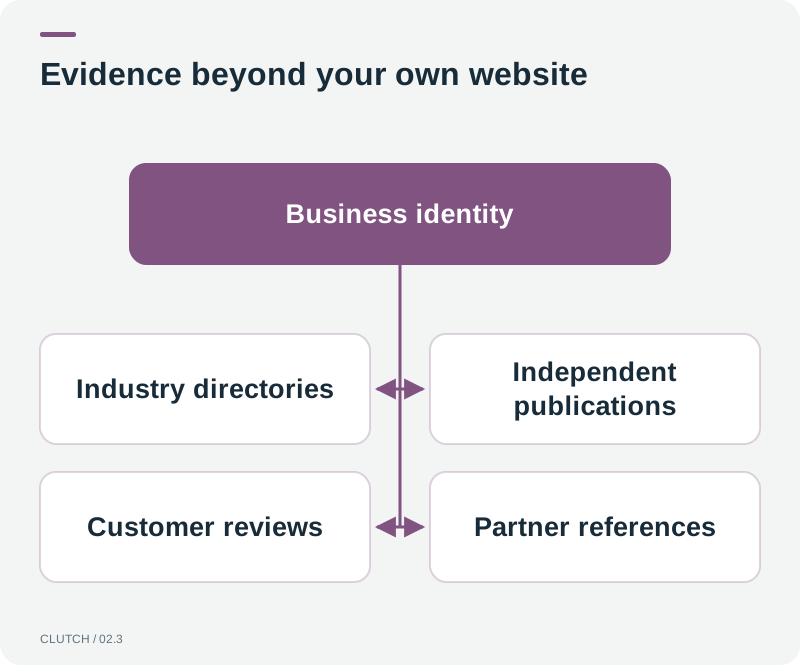
A business that exists only on its own website is harder for an AI system to confidently recommend than one that appears across multiple credible sources. Third-party corroboration includes mentions in industry publications, listings in relevant directories, reviews on recognized platforms, citations in research, and a consistent presence across the web.
When a generative system encounters a business mentioned across multiple independent sources, it has more confidence that the business is a legitimate, recognized entity. This does not mean you need to be featured in major publications to appear in AI search. It means that building a genuine presence across the web strengthens the signals that support citation.
Third-party corroboration across directories, publications, and review platforms strengthens citation potential.
Layer 6: Freshness and Maintenance
Information changes. Services evolve. Prices adjust. Industries shift. Content that is outdated or inaccurate is less likely to be cited because it may provide incorrect information. Freshness and maintenance mean periodically reviewing and updating important content to ensure it remains accurate, current, and relevant.
This does not mean rewriting everything constantly. It means identifying your most valuable pages, the ones most likely to be discovered and cited, and keeping them current. Adding new information, updating examples, and reflecting changes in your industry or offerings all contribute to freshness.
Layer 7: Conversion Readiness
If an AI system cites your business and a prospect clicks through to your site, what happens next? Conversion readiness means the site is prepared to turn that visit into an inquiry. The page loads quickly, the content is relevant to what the prospect was reading, and there is a clear, functional path to request more information, book a call, or start a conversation.
This layer connects AI search visibility to business outcomes. Being cited in an AI answer is valuable only if it leads to a potential customer taking action. A site that is slow, confusing, or lacks clear conversion paths will waste the visibility it earns. This is why Clutch connects visibility work to conversion infrastructure and follow-up systems like AI Sales Agents.
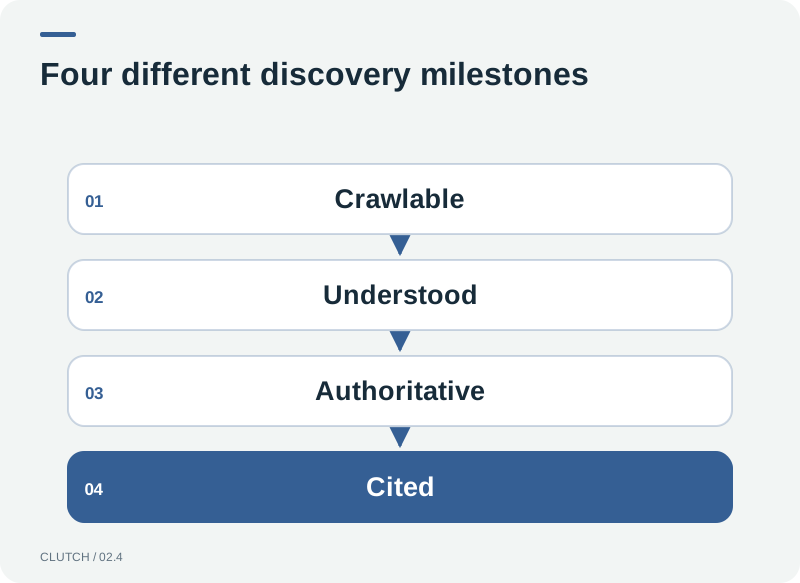
Being crawlable, being understood, being considered authoritative, and being cited are distinct stages of AI discovery.
Step-by-Step Implementation Guide
The following steps translate the AI Visibility Stack into a practical sequence. Not every step applies to every business, but the order reflects how the layers build on each other.
Run a technical accessibility audit. Confirm your site is crawlable, renders properly, loads fast, and has no major indexing errors. Check robots.txt and XML sitemap configuration.
Implement structured data for your business entity. Use Organization, LocalBusiness, or Service schema that accurately reflects visible page content.
Audit your most important content for clarity and depth. Ensure each page clearly communicates what the business does, for whom, and why it is credible.
Build topical clusters around your core services. Create connected content that demonstrates expertise and provides multiple discovery entry points.
Add original information to your most valuable pages. Include case studies, proprietary frameworks, expert analysis, or implementation guidance based on real experience.
Strengthen third-party presence. Ensure consistent business information across directories, generate reviews on relevant platforms, and pursue genuine industry mentions.
Structure question-based content with concise direct answers. Use question headings and provide 40 to 80 word answers that a system can extract.
Review and update important content periodically. Keep information accurate, current, and relevant to maintain citation potential.
Test conversion paths on the pages most likely to receive AI referral traffic. Ensure forms, calls, and booking work on mobile.
Monitor referral traffic from AI platform domains in your analytics. Track brand mentions and adjust your approach based on what you observe.
Platform-Specific Considerations
Each AI search platform has its own characteristics, though the fundamentals of accessibility, content quality, and authority apply across all of them. Understanding the differences helps with prioritization.
Google AI Mode and AI Overviews draw on Google's index and tend to reward content that performs well in traditional organic search. Strong SEO fundamentals, structured data, and clear answers support visibility here. Google's documentation emphasizes helpful content and has published guidance on AI Overviews, though the specific selection process is not fully transparent.
ChatGPT with search retrieves information from the web to provide responses with source citations. Accessibility and content clarity matter, as does the authority signaled by third-party mentions. OpenAI's products evolve, and the specific retrieval behavior may change, but the fundamentals of producing useful, well-structured, authoritative content remain consistent.
Perplexity is designed around citation and source transparency. It tends to surface content that is clearly structured and provides specific, useful information. Concise answers, well-organized content, and original data or analysis are particularly valuable for Perplexity visibility.
Gemini, Google's AI assistant, draws on Google's broader information ecosystem. The same fundamentals that support Google AI Mode visibility apply. Bing, which powers some AI search experiences, also rewards traditional SEO fundamentals and structured data.
What You Cannot Control
It is important to be honest about the limits of what any business can control in AI search. Generative platforms decide what to retrieve, how to synthesize it, and what to cite. These processes are not fully transparent, they change over time, and no provider can guarantee specific placement.
What you can control is the quality, accessibility, clarity, and authority of your content and your web presence. You can improve the conditions that make citation more likely. You cannot force a specific outcome. Businesses that approach AI search visibility with realistic expectations and consistent effort tend to see better results than those chasing guaranteed placement.
Connecting AI Visibility to Business Results
Appearing in an AI answer is not the end goal. The end goal is generating business from the visibility you earn. This is where AI search visibility connects to the broader growth system. When a prospect discovers your business through an AI platform and visits your site, the experience they encounter determines whether they become a lead.
Clutch connects visibility work to conversion infrastructure and follow-up systems. A smart website that loads quickly and guides visitors toward a clear next step. AI Sales Agents that respond instantly when a lead comes in. CRM automation that ensures no opportunity falls through the cracks. The visibility strategy and the conversion strategy should be managed as one connected system, because visibility without conversion is just traffic.
If you want to explore how this connected approach applies to your business, you can learn about our Multi-Engine Optimization services, our smart website development, or our AI Sales Agents.
Frequently Asked Questions
Frequently Asked Questions
Can you guarantee my business appears in ChatGPT?
No. No legitimate provider can guarantee inclusion in any specific AI-generated response. Generative systems select sources through processes that are not fully transparent. What you can do is improve the conditions that make citation more likely through accessibility, content quality, entity clarity, authority, and third-party corroboration.
How is AI search different from traditional SEO?
Traditional SEO competes for ranking positions on a search results page. AI search involves being discovered, understood, and cited by generative systems that synthesize answers. The fundamentals overlap significantly, but AI search places more emphasis on entity clarity, authority signals, and content that provides original, extractable information.
Does structured data guarantee AI citations?
No. Structured data helps systems understand your content and entity, which can improve the conditions for citation. It does not force any platform to reference your business. Schema should accurately reflect visible page content and be treated as a best practice, not a guarantee.
How do I know if my business is appearing in AI search?
Track referral traffic from AI platform domains in your analytics. Search for your business name and relevant category terms in ChatGPT, Perplexity, and Google AI Mode to see if you are mentioned. Monitor branded search volume for increases that may indicate AI-driven discovery.
How long does it take to improve AI search visibility?
Technical improvements can show results within weeks. Content and authority building typically take three to six months. AI search visibility is less predictable than traditional SEO and depends on how generative platforms evolve. Consistent effort produces more reliable results than short campaigns.
Do I need different content for AI search than for traditional SEO?
Not necessarily. The same content that serves traditional search intent, if it is well-structured, original, and authoritative, also supports AI search visibility. The main additions are concise direct answers under question headings, strong entity clarity, and original information that gives a generative system a reason to cite you.
What is the most important thing I can do to improve AI search visibility?
Start with technical accessibility. If AI crawlers cannot access and read your content, nothing else matters. After that, focus on producing original, authoritative content and building third-party corroboration. These fundamentals support both traditional SEO and AI search visibility.
Should I hire a separate vendor for AI search optimization?
In most cases, no. The fundamentals of AI search visibility overlap heavily with traditional SEO. A coordinated strategy managed by one provider who understands the full picture is typically more efficient than separate vendors who may duplicate effort or create fragmentation.
Turn AI search visibility into business results
Being cited in an AI answer is only valuable if it leads to a customer. Clutch Digital Development connects AI search visibility to smart websites, AI Sales Agents, and CRM automation so every discovery becomes a potential opportunity.
Tags:#how to get found in ChatGPT#AI search optimization#AI search visibility#Google AI Mode optimization#Gemini SEO#Perplexity SEO#GEO optimization#AI citations#LLM visibility
READY TO PUT AI TO WORK?
What Could an AI Sales Agent Do for Your Business?
Every business handles leads differently. We'll look at your current sales process, lead volume, response times, follow-up, staffing, and opportunities to determine where an AI Sales Agent could have the biggest impact.
Search discovery expanded beyond a single results page. Multi-Engine Optimization is the framework for staying visible across organic search, AI answers, conversational platforms, and more without abandoning proven SEO fundamentals.
Confused by the alphabet soup of modern search optimization? This plain-English comparison breaks down SEO, AEO, GEO, and AIO, where they overlap, and what your business should prioritize.
Google does not penalize content simply because AI assisted in creating it. The real risk is scaled content abuse, not the tool. Learn what Google's guidelines actually say and how to use AI safely.