Home/Blogs & Insights/The Multi-Engine Visibility Audit: How to Measure Whether Your Business Is Actually Discoverable Online
AI Search Optimization
The Multi-Engine Visibility Audit: How to Measure Whether Your Business Is Actually Discoverable Online
Traditional SEO reporting captures only one discovery environment. The Multi-Engine Visibility Audit measures seven categories of visibility, identifies blind spots, and connects discovery to business outcomes.
Vince Beekel
Jul 31, 202613 min read
Table of Contents
Most business owners can tell you their organic traffic number. Far fewer can tell you whether their company appears in AI-generated answers, how visible they are in local discovery, or whether their content covers the questions their prospects actually ask. The gap between what businesses measure and where their customers actually discover them is where opportunities are lost.
The Multi-Engine Visibility Audit is a structured methodology for measuring whether your business is actually discoverable across the full range of search, answer, and discovery environments. It goes beyond keyword rankings to evaluate visibility holistically, connect it to business outcomes, and identify the blind spots that cost you leads. This article provides the framework, the tools, and a practical checklist you can use.
For the broader strategy this audit supports, read our complete guide to Multi-Engine Optimization. For implementation steps for AI search specifically, see how to get your business found in ChatGPT, Google AI Mode, Gemini, and Perplexity.
Why Traditional SEO Reporting Is No Longer Enough
Traditional SEO reporting focuses on keyword rankings and organic traffic. These metrics remain relevant, but they capture only one discovery environment. A business can rank well organically and still be invisible in AI-generated answers, underrepresented in local search, or absent from the third-party sources that influence citation. Reporting that covers only organic rankings creates a false sense of completeness.
The problem is not that traditional metrics are wrong. The problem is that they are incomplete. A prospect may discover your business through an AI answer, a map listing, a directory, a review platform, or a social search, none of which show up in a standard keyword ranking report. If you are not measuring these environments, you cannot identify where you are strong, where you are weak, and where you are entirely absent.
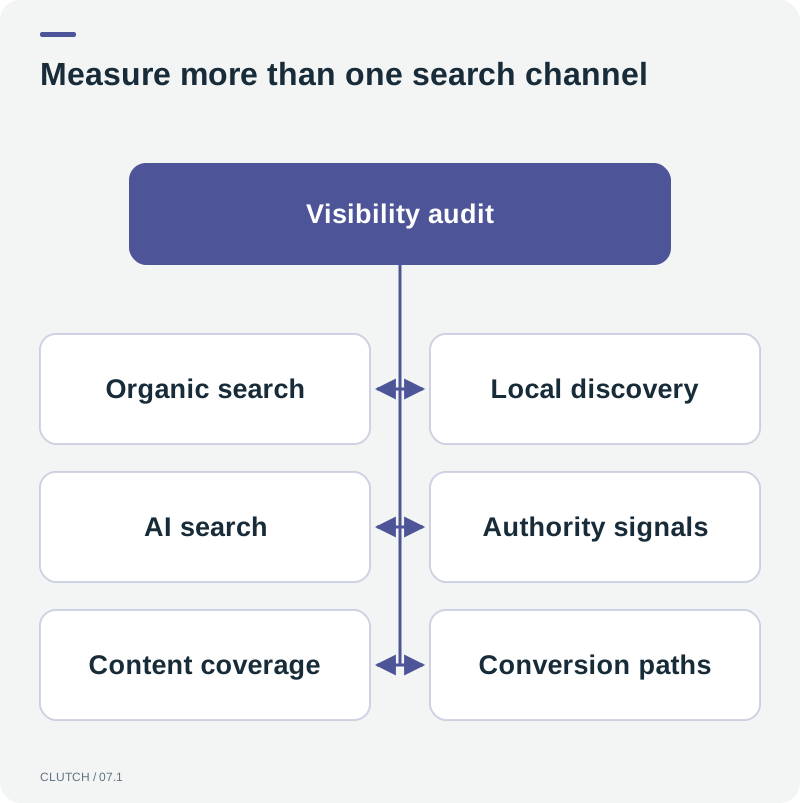
A complete visibility audit measures discovery across organic search, local, AI, authority, content, and conversion environments.
The Multi-Engine Visibility Scorecard
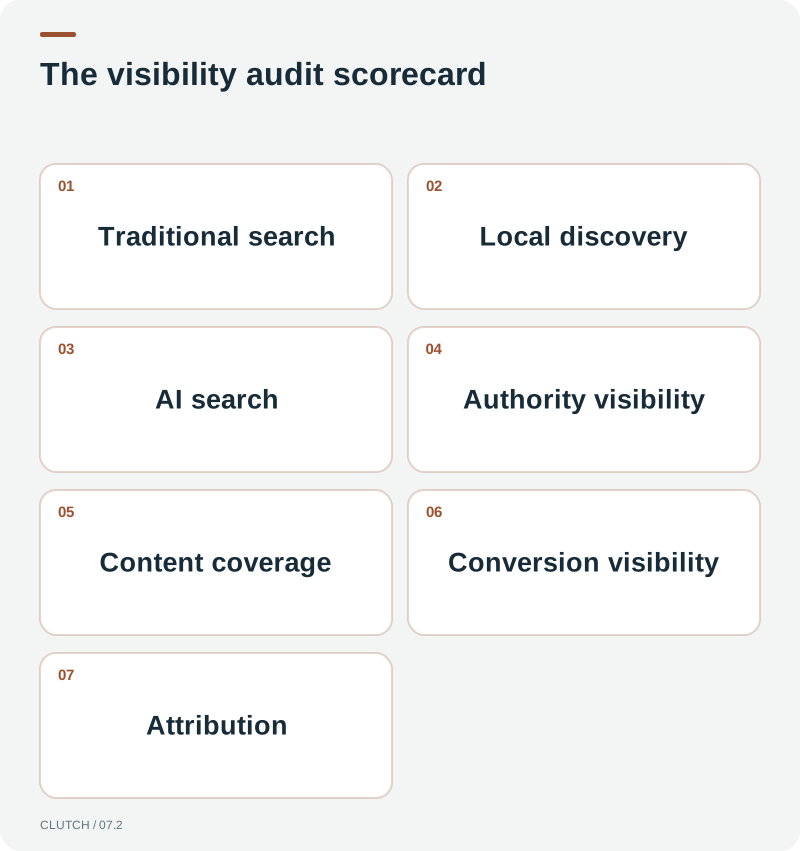
Clutch organizes visibility measurement into seven categories. Each category captures a different discovery environment, and together they provide a comprehensive picture of whether your business is actually findable online. The scorecard is designed to be practical, not academic. Every category connects to specific tools, metrics, and actions.
The Multi-Engine Visibility Scorecard evaluates seven categories of discovery to identify blind spots and opportunities.
1. Traditional Search Visibility
This category measures your presence in traditional organic search results. It includes branded searches, where users search your company name, and non-branded searches, where users search for services or topics without naming a specific company. Track organic rankings, search impressions from Google Search Console, and topical visibility across your core service areas. The goal is to understand not just whether you rank, but whether you rank for the queries your prospects actually use.
2. Local Discovery
For businesses with a physical presence or service area, local discovery is critical. This category measures your Google Business Profile completeness and optimization, visibility in Google Maps, presence in local search results, review quantity and quality, and consistency of business information across local directories. Local entity consistency, meaning your name, address, phone, and category are identical everywhere, directly affects whether local search systems can confidently recommend you.
3. AI Search Visibility
This category measures whether your business appears in AI-generated answers across platforms. Check whether your company is mentioned in ChatGPT responses for relevant category queries. Search for your services in Google AI Mode and AI Overviews. Test Perplexity for citation appearances. Track referral traffic from AI platform domains in your analytics. Monitor brand mentions in AI-generated responses. This is the newest and least measured category, which makes it the most likely source of blind spots.
4. Authority Visibility
Authority visibility measures your presence across third-party websites that influence how credible your business appears to search and AI systems. This includes backlinks from relevant websites, unlinked brand mentions in industry content, directory listings, partnership references, and coverage in industry publications. Authority visibility is not just about link counts. It is about whether your business is recognized as a legitimate entity across the web.
5. Content Coverage
This category evaluates whether your content covers the topics, questions, and buying stages your prospects actually go through. Are there content gaps in your service areas? Do you address the common questions your sales team hears? Do you have content for comparison, decision, and implementation stages? Content coverage is about topical completeness, not volume. A business with twenty thin pages has less coverage than one with eight thorough, well-connected pages.
6. Conversion Visibility
Conversion visibility asks whether a visitor who discovers your business can clearly understand what you do and take action. Can they call, book, request information, or buy without friction? Are forms, calls-to-action, and contact paths obvious and functional on mobile? This category connects visibility to business outcomes. A business with strong discovery but weak conversion infrastructure is visible without being effective.
7. Attribution
Attribution measures whether you can determine what produced a visitor, what converted them, and what generated revenue. Can you trace a lead back to the discovery environment that started the journey? Do your analytics connect visibility to conversions? Without attribution, you cannot evaluate which visibility investments are producing business results and which are vanity metrics. This category is about closing the loop between discovery and revenue.
Visibility vs. Business Results
Visibility is not the goal. Business results are the goal. The audit framework exists to connect visibility to outcomes, not to produce impressive-looking numbers that do not translate to leads, appointments, or sales. Every visibility metric should eventually connect to a business metric.
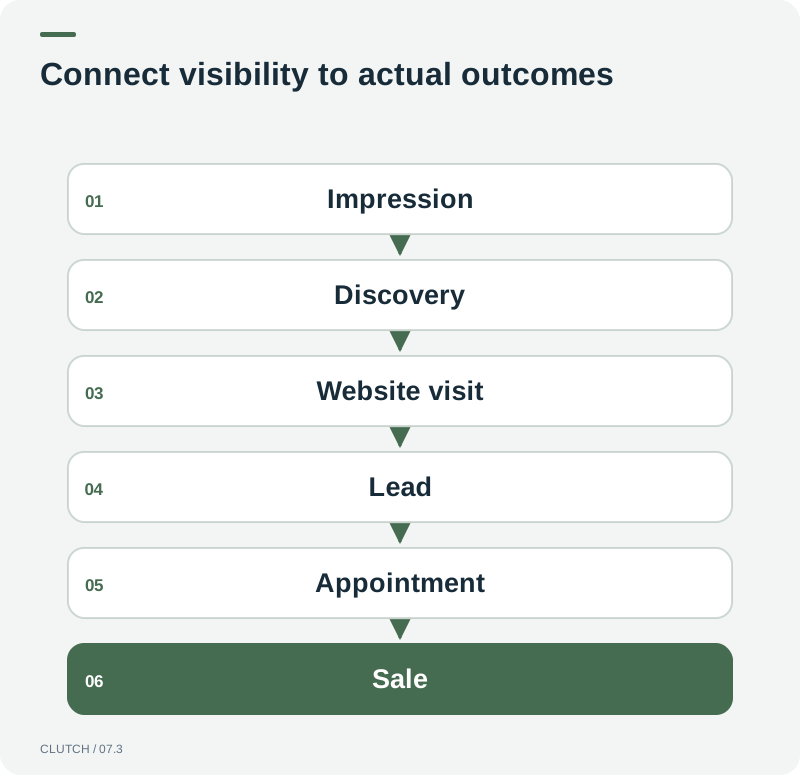
Visibility metrics are valuable only when connected to the business outcomes they produce.
The journey from impression to sale involves multiple stages. An impression in search or AI results leads to discovery. Discovery may lead to a website visit. A visit may become a lead. A lead may become an appointment. An appointment may become a sale. At each stage, some prospects drop off. Measuring where the drop-offs happen tells you whether your problem is visibility, conversion, or follow-up. A business with high visibility but low lead volume likely has a conversion problem. A business with good conversion but low visibility likely has a discovery problem.
Visibility Blind Spots
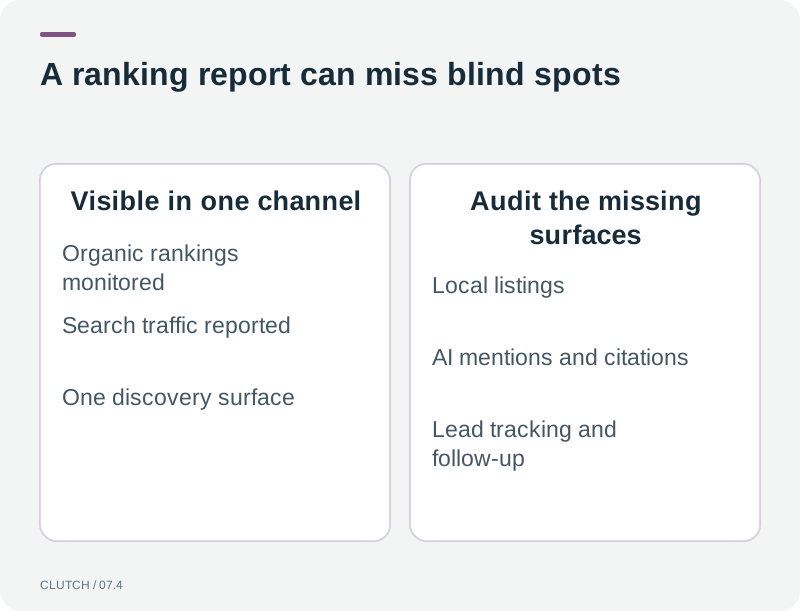
The most dangerous visibility problems are the ones you cannot see. A business may have strong organic search performance and assume their visibility is comprehensive, while being entirely absent from AI-generated answers, poorly represented in local search, or missing from the third-party sources that influence citation. These blind spots represent prospects who are discovering competitors instead of you.
Visibility blind spots, channels where your business is absent, represent prospects discovering competitors instead of you.
The audit is designed to surface these blind spots. By measuring all seven categories, you identify which environments you are strong in, which are weak, and which are completely unaddressed. The categories that are dark or disconnected are your highest-priority opportunities, because they represent discovery environments where your competitors may be capturing prospects you never had a chance to reach.
What Tools Should Businesses Use?
The audit does not require expensive enterprise tools. Most of the data is available through free or widely accessible platforms, combined with manual checks.
Google Search Console tells you which queries trigger impressions, your click-through rates, and your average positions. It is the primary source for traditional search visibility data. Verify whether current Search Console reporting includes AI-related performance metrics, as Google's reporting capabilities evolve.
Google Analytics, specifically GA4, shows referral traffic sources, including whether visitors arrive from AI platform domains. It tracks conversions, engagement, and user journeys. Use it to connect visibility to business outcomes and identify where prospects drop off.
Rank trackers, whether standalone tools or features within SEO platforms, track keyword positions over time. They are useful for monitoring traditional search visibility trends, but they should not be your only measurement source because they do not capture AI, local, or authority visibility.
For AI search visibility, manual checks are currently the most reliable method. Search for your business name and relevant category terms in ChatGPT, Perplexity, and Google AI Mode. Note whether you are mentioned, cited, or absent. This is not scalable for hundreds of queries, but it provides direct observation of your AI search presence for your most important topics.
For local visibility, review your Google Business Profile insights, check your Maps presence, and audit your listings across major directories for consistency. For authority visibility, use backlink analysis tools to review your link profile and search for unlinked brand mentions across the web.
How Often Should the Audit Be Performed?
A full Multi-Engine Visibility Audit should be performed at least quarterly. The search and AI landscape changes quickly enough that a six-month gap can leave you working from outdated assumptions. For businesses in competitive markets or those actively investing in visibility, monthly reviews of key metrics are advisable, with a full seven-category audit quarterly.
The audit is not a one-time exercise. It is an ongoing measurement practice that tracks how your visibility evolves as search platforms change, as competitors adjust, and as your own content and authority grow. Treat it as a recurring health check, not a project that gets completed and filed away.
Which Metrics Are Vanity Metrics?
Vanity metrics are numbers that look impressive but do not connect to business outcomes. Total page views without engagement data. Keyword rankings for terms no one searches. Social media followers without conversion. Backlink counts without relevance or quality assessment. These metrics can make a report look strong while masking real problems.
The metrics that matter are those that connect to leads, appointments, and revenue. Organic traffic that converts. AI visibility that generates referral visits. Local visibility that produces calls and form submissions. Authority signals that correlate with increased discovery. Focus your reporting on metrics that tell you whether your visibility is producing business results, not just whether the numbers are going up.
What Should Be Reported to Leadership?
Leadership does not need every metric the audit produces. They need a clear picture of whether the business is discoverable, whether discovery is producing leads, and where the biggest opportunities for improvement are. A good leadership report summarizes the seven categories with a clear status for each, highlights the blind spots, connects visibility to revenue, and recommends specific actions.
Avoid overwhelming decision-makers with raw data. Translate metrics into business language. Instead of reporting that organic impressions increased 15 percent, report that organic visibility generated 42 leads last quarter, up from 31, and that the AI search category remains a blind spot representing an estimated opportunity. Context and connection to outcomes matter more than volume of data.
Example Scorecard
The following is a hypothetical example to illustrate how a scorecard might look. These are not real numbers from a real business. They demonstrate the format and the kind of insights the audit produces.
Category
Status
Key Finding
Traditional Search
Strong
Ranks well for branded and core service terms; 12,400 monthly impressions
Local Discovery
Moderate
Google Business Profile claimed but incomplete; 3.8 star rating with 14 reviews
AI Search Visibility
Weak
Not mentioned in ChatGPT for category queries; minimal AI referral traffic
Authority Visibility
Moderate
47 referring domains but few from industry-relevant publications
Content Coverage
Weak
Service pages exist but no supporting articles; common customer questions unaddressed
Conversion Visibility
Strong
Forms and call tracking functional; mobile conversion path tested
Attribution
Moderate
GA4 configured but AI and assisted conversions not fully tracked
This example scorecard immediately surfaces two priority blind spots: AI search visibility and content coverage. The business is strong in traditional search and conversion but is absent from AI-generated answers and lacks the content that would support both AI citation and customer education. The recommended actions would focus on building topical content clusters and strengthening authority signals for AI discovery.
The 30-Point Multi-Engine Visibility Audit Checklist
Use this checklist to perform your own audit. Group the items by category and work through them systematically. Not every item applies to every business, but the list reflects the most important checks across all seven categories.
Site is crawlable with no major indexing errors in Search Console
XML sitemap submitted and canonical tags configured correctly
Branded search rankings verified for company name variations
Non-branded rankings tracked for core service keywords
Search Console impressions and CTR reviewed for top queries
Google Business Profile claimed, complete, and regularly updated
Business information consistent across all major directories
Review quantity and rating assessed on primary platforms
Google Maps visibility checked for service area
Business searched in ChatGPT for category and service terms
Business searched in Google AI Mode for relevant queries
Business searched in Perplexity for citation appearances
Referral traffic from AI platform domains reviewed in GA4
Brand mentions monitored in AI-generated responses
Backlink profile reviewed for quantity, relevance, and quality
Unlinked brand mentions searched across the web
Directory listings audited for completeness and accuracy
Industry publication mentions checked
Core service topics reviewed for content coverage
Common customer questions identified and checked for dedicated content
Website forms tested for functionality on desktop and mobile
Call tracking verified and phone numbers clickable on mobile
Booking or appointment paths tested end to end
Mobile page speed tested for primary landing pages
GA4 conversion tracking verified for key actions
Assisted conversions and multi-touch journeys reviewed
Revenue attribution connected to discovery sources where possible
Quarterly audit schedule established
Frequently Asked Questions
Frequently Asked Questions
What is a Multi-Engine Visibility Audit?
A Multi-Engine Visibility Audit is a structured methodology for measuring whether your business is discoverable across the full range of search, answer, and discovery environments. It evaluates seven categories: traditional search, local discovery, AI search, authority, content coverage, conversion, and attribution. The goal is to identify blind spots and connect visibility to business outcomes.
How is this different from a traditional SEO audit?
A traditional SEO audit focuses primarily on organic search rankings, technical crawlability, and on-page factors. A Multi-Engine Visibility Audit covers those areas plus AI search visibility, local discovery, authority presence, content coverage, conversion readiness, and attribution. It measures a broader set of discovery environments because customers no longer find businesses only through organic search.
What tools do I need for the audit?
Most data comes from free or widely accessible tools: Google Search Console for search performance, GA4 for traffic and conversions, rank trackers for keyword positions, and manual checks in AI platforms for AI visibility. Backlink tools and directory audit tools supplement these. The audit does not require expensive enterprise software.
How often should I perform the audit?
At least quarterly for a full seven-category audit. For businesses in competitive markets or actively investing in visibility, monthly reviews of key metrics are advisable. The search and AI landscape changes quickly enough that a six-month gap can leave you working from outdated assumptions.
Can Search Console show AI search visibility?
Google Search Console's reporting capabilities evolve over time. Check current official documentation to see whether AI-related performance metrics are available. Regardless of Search Console's current features, AI visibility should also be measured through manual checks in AI platforms and referral traffic analysis in GA4.
What are visibility blind spots?
Blind spots are discovery environments where your business is absent or underrepresented but your competitors are present. They are dangerous because you cannot see them in standard SEO reports. A business may have strong organic rankings but be entirely absent from AI-generated answers, representing prospects who discover competitors instead.
Which metrics are vanity metrics?
Vanity metrics are numbers that look impressive but do not connect to business outcomes. Examples include total page views without engagement, keyword rankings for terms no one searches, and backlink counts without relevance assessment. Focus on metrics that connect to leads, appointments, and revenue.
What should I report to leadership?
Summarize the seven categories with a clear status for each, highlight blind spots, connect visibility to revenue, and recommend specific actions. Translate metrics into business language. Context and connection to outcomes matter more to leadership than volume of raw data.
Request a Multi-Engine Visibility Audit
If you cannot confidently say whether your business appears in AI search, local discovery, and authority sources, you have blind spots that are costing you leads. Clutch Digital Development performs comprehensive visibility audits that identify where you are strong, where you are absent, and where the biggest opportunities are.
What Could an AI Sales Agent Do for Your Business?
Every business handles leads differently. We'll look at your current sales process, lead volume, response times, follow-up, staffing, and opportunities to determine where an AI Sales Agent could have the biggest impact.
Search discovery expanded beyond a single results page. Multi-Engine Optimization is the framework for staying visible across organic search, AI answers, conversational platforms, and more without abandoning proven SEO fundamentals.
There is no guaranteed switch for AI search visibility, but there is a practical set of things businesses can control. This implementation guide covers the AI Visibility Stack and step-by-step actions for being discovered and cited.
Citation visibility in AI search is broader than ranking first on Google. Learn the Citation-Worthiness Equation, the difference between ranking authority and citation utility, and what makes information worth referencing.