Home/Blogs & Insights/Custom Website vs. Pre-Built Website: Which Is the Better Investment for Your Business?
Web Development
Custom Website vs. Pre-Built Website: Which Is the Better Investment for Your Business?
A well-executed pre-built website can outperform a poorly executed custom site. Learn the Website Investment Test and how to decide based on business requirements, not assumptions.
Vince Beekel
Jun 12, 202612 min read
Table of Contents
When a business needs a new website, one of the first decisions is whether to invest in custom development or use a professionally built pre-designed system. This decision is often framed as a choice between quality and cost, but that framing is incomplete. A well-executed pre-built website can outperform a poorly executed custom website. A well-built custom website can do things no pre-built system can. The right choice depends on what the business actually needs, not on which option sounds more impressive.
This article helps business owners evaluate whether they need custom development or whether a pre-built website system can accomplish the same business goals at a lower investment. For the structural considerations that apply to both approaches, see our guide to website architecture for SEO and AI search.
What Is a Custom Website vs. a Pre-Built Website?
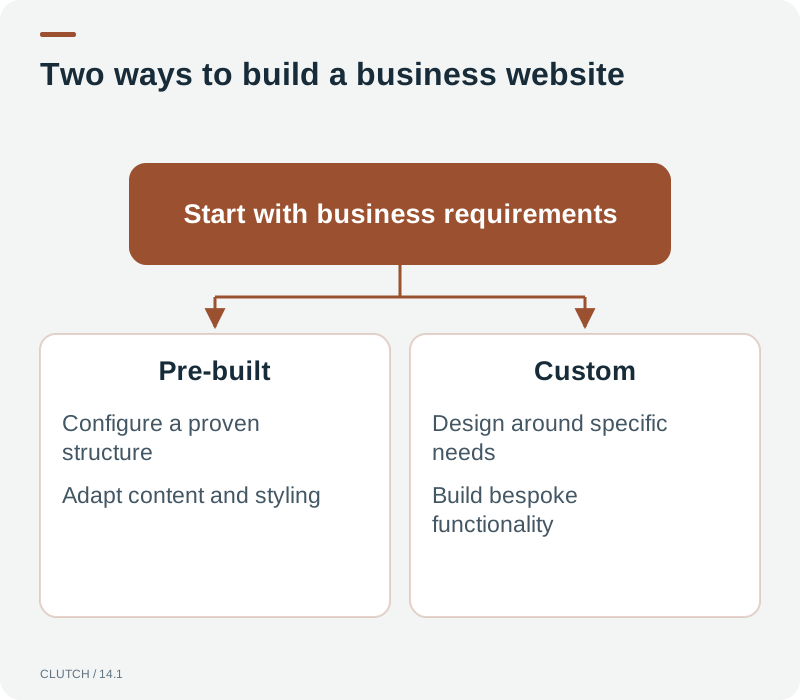
A custom website is built from the ground up specifically for one business. The design, layout, code, page structure, and functionality are created based on that business's requirements. No other company uses the same system. A pre-built website is a professionally designed, pre-structured website system that can be configured, customized, and deployed faster than building from scratch. It uses established patterns, proven layouts, and tested technical foundations, with the ability to adapt branding, content, and configuration to the specific business.
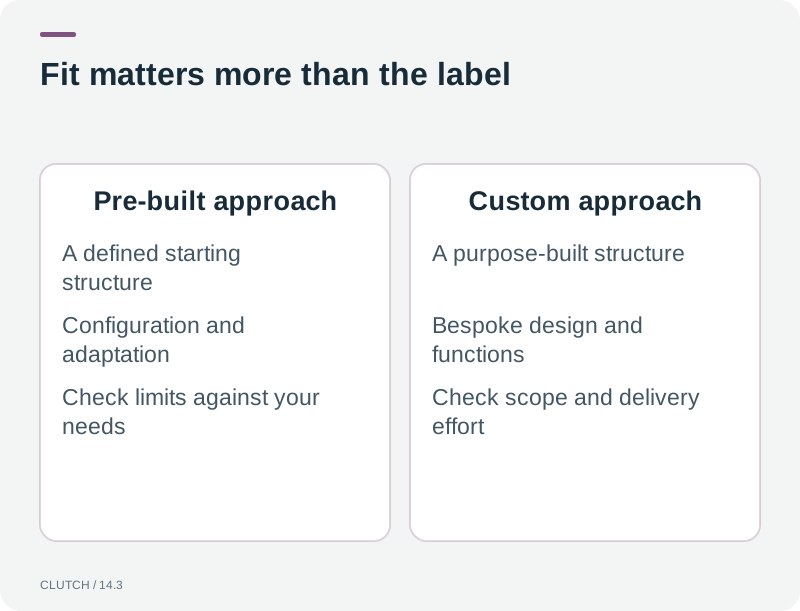
The distinction is not between good and bad. Both can be fast, SEO-friendly, conversion-focused, and well-designed, or both can be poorly executed. Execution matters more than the label. A pre-built system that is properly configured, well-optimized, and strategically customized can produce better business results than a custom site that is over-engineered, slow, and difficult to maintain.
Both custom and pre-built websites can be excellent or poorly executed. The decision should follow business requirements, not assumptions.
The Website Investment Test
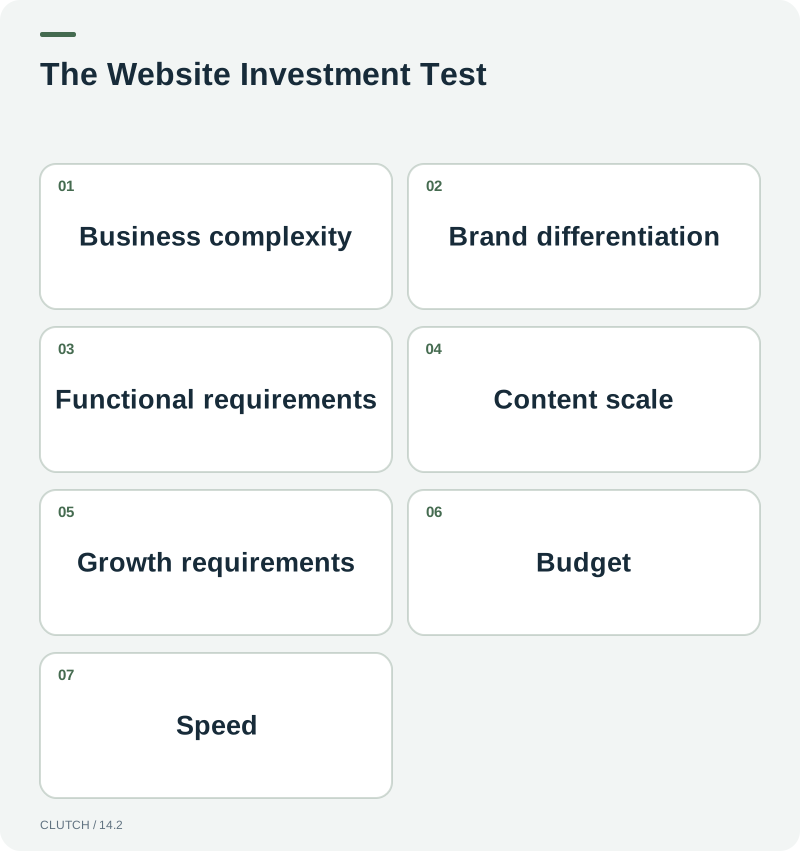
Clutch uses a seven-factor framework to determine whether a business needs custom development or can achieve its goals with a pre-built system. Each factor evaluates a different dimension of the project. The answer emerges from the combined picture, not from any single factor alone.
The Website Investment Test evaluates complexity, differentiation, functionality, content scale, growth, budget, and speed.
1. Business Complexity
How complex are the company's services, customer journeys, and sales processes? A business with one service and a simple booking process needs less architectural complexity than a business with multiple service lines, multi-step qualification, custom integrations, and industry-specific workflows. High complexity favors custom development. Low to moderate complexity can often be handled by a well-configured pre-built system.
2. Brand Differentiation
How unique does the visual and interactive experience need to be? Some businesses compete on brand experience and need a website that looks and feels unlike any competitor. Others compete on service quality, reviews, and price, where a professional, clean, trustworthy design is sufficient without being entirely unique. Strong differentiation needs favor custom. Moderate differentiation needs can be met with a well-customized pre-built system.
3. Functional Requirements
What integrations, automation, APIs, calculators, customer portals, e-commerce, or custom workflows are required? If the website needs to connect to a proprietary CRM, display real-time inventory from a custom database, or run a multi-step quoting engine, custom development may be necessary. If the requirements are standard, like contact forms, appointment booking, CRM integration, and content management, a pre-built system with the right integrations can handle them.
4. Content Scale
How many services, products, industries, resources, and locations does the website need to support? A small business with five service pages and a contact form has different needs than a company with fifty service pages, three industry verticals, a blog with hundreds of articles, and location pages for twenty cities. Large content scale can be handled by either approach, but the architecture must be planned accordingly regardless of whether it is custom or pre-built.
5. Growth Requirements
What will the website need to do 12 to 36 months from now? If the business plans to add e-commerce, membership areas, custom tools, or complex integrations in the near future, the foundation should support that growth. Custom development allows for precise forward planning. A well-chosen pre-built system should also be extensible enough to handle growth without requiring a complete rebuild.
6. Budget
What investment makes financial sense for the business? Custom development costs more because it requires more time, design, and engineering. A pre-built system costs less because the foundational work has already been done. The question is whether the additional investment in custom development will produce a proportional return, or whether the business goals can be met at a lower cost. For many businesses, a pre-built system delivers the majority of the value at a fraction of the cost.
7. Speed
How quickly must the website launch? Custom development takes longer because everything is built from scratch. A pre-built system can launch faster because the foundation exists. If the business needs a website live in weeks rather than months, a pre-built system may be the practical choice. If there is no urgency and the business needs something that no pre-built system can provide, custom development is viable.
Comparison Table: Custom Website vs. Pre-Built Website
Attribute
Custom Website
Pre-Built Website
Initial Investment
Higher, built from scratch
Lower, foundation already exists
Launch Speed
Slower, weeks to months
Faster, days to weeks
Brand Flexibility
Complete design freedom
Configurable within established patterns
Functionality
Built to exact specifications
Standard features plus configuration options
Integrations
Custom API and system connections
Supported integrations plus custom where needed
Scalability
Designed for projected growth
Extensible with proper planning
SEO Potential
Depends on execution, not inherently better
Depends on execution, can be equally strong
Conversion Potential
Depends on strategy and testing
Depends on strategy and testing
Maintenance
Ongoing developer relationship needed
Lower maintenance overhead
Future Customization
Unlimited, built to adapt
Possible but within system constraints
Best Fit
Complex, unique, integration-heavy businesses
Service businesses needing professional presence fast
Neither approach is inherently superior. The decision follows the business requirements identified in the Website Investment Test.
Is Custom Web Design Better for SEO?
Not inherently. SEO performance depends on technical execution, content quality, site architecture, page speed, structured data, internal linking, and content depth. A custom website that is poorly coded, slow, and lacking structured data will rank worse than a pre-built system that is fast, well-structured, and semantically clean. A custom website that is built with SEO best practices from the ground up can outperform a pre-built system, but only if the development team executes properly. The SEO advantage does not come from the label. It comes from the execution.
Can Template Websites Rank?
Yes. Search engines do not rank websites based on whether they were custom-built or use a template. They rank based on relevance, content quality, technical accessibility, page experience, and authority. A pre-built website with well-written content, proper structure, fast loading, clean code, and good internal linking can rank competitively. Many businesses rank well with pre-built systems because the SEO fundamentals are sound, not because the site was custom-coded.
When Is Custom Development Worth It?
Custom development is worth the investment when the business needs something that no pre-built system can provide. That includes proprietary integrations with internal systems, custom user portals, complex quoting or calculation engines, unique interactive experiences that are central to the brand, or architectures that must support highly specialized content relationships. If the website is a competitive advantage in itself, custom development is justified. If the website is a professional presence that needs to convert well, a pre-built system may be the better financial decision.
When Is Custom Development Unnecessary?
Custom development is unnecessary when the business needs a professional, fast, conversion-focused website and the requirements can be met by a well-configured pre-built system. Many service businesses, professional practices, and local companies need exactly that. They need clear service pages, strong calls to action, trust signals, booking integration, CRM connection, and good SEO. A pre-built system with professional configuration delivers all of that without the cost and timeline of custom development.
What About Total Cost of Ownership?
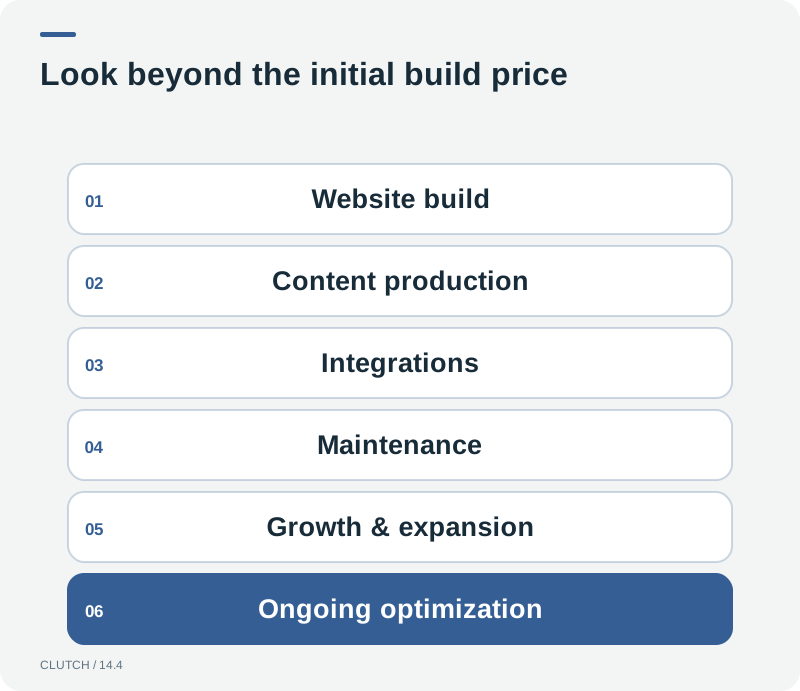
Total cost of ownership includes build, content, integrations, maintenance, growth, and optimization over the life of the website.
The initial build cost is only one layer. Total cost of ownership includes the initial build, content creation, integrations, ongoing maintenance, hosting, security updates, content updates, performance optimization, and future enhancements. Custom websites typically carry higher ongoing maintenance costs because the custom code requires a developer who understands the system. Pre-built systems often have lower maintenance overhead because updates, security patches, and improvements are handled by the platform.
When comparing the two, calculate the total cost over a two to three year period, not just the initial build. A custom site that costs more upfront and more to maintain may be justified if it generates significantly more revenue. A pre-built system that costs less upfront and less to maintain may be the better financial decision if it meets the business goals equally well.
Custom or Pre-Built Decision Scorecard
Does the business need functionality that no pre-built system provides? If yes, lean custom.
Does the business need a unique brand experience that templates cannot deliver? If yes, lean custom.
Does the business need proprietary integrations or custom workflows? If yes, lean custom.
Is the budget constrained and the timeline urgent? If yes, lean pre-built.
Are the requirements standard: service pages, forms, booking, CRM, SEO? If yes, lean pre-built.
Will the business need significant future customization? If yes, evaluate whether the pre-built system supports it.
Does the business compete on brand experience or on service quality? Brand experience favors custom. Service quality can be served by either.
Frequently Asked Questions
Frequently Asked Questions
Is a custom website better for SEO than a pre-built website?
Not inherently. SEO performance depends on technical execution, content quality, site architecture, page speed, structured data, and internal linking. A well-optimized pre-built system can rank competitively. A poorly built custom site can rank poorly. The SEO advantage comes from execution, not from whether the site was custom-coded or uses a template.
Are pre-built websites bad for branding?
Not when they are professionally configured. A pre-built system can be customized with brand colors, typography, imagery, layout adjustments, and content that reflects the company's identity. The limitation is that the design exists within established patterns rather than being entirely bespoke. For many businesses, this is sufficient. For businesses that compete primarily on brand experience, custom may be justified.
How much customization can a pre-built website support?
A well-built pre-built system supports significant customization: branding, layout configuration, content structure, integrations, and functional extensions. The limitation is that the core architecture follows established patterns. Full structural freedom, proprietary workflows, and entirely unique interactive experiences typically require custom development.
Should a startup buy a custom website?
Usually not initially. Startups benefit from launching fast and conserving capital. A pre-built system that is professionally configured can establish a credible online presence, capture leads, and support growth. Custom development becomes more appropriate when the business has validated its model, understands its needs, and can justify the investment based on specific requirements that pre-built systems cannot meet.
Should an established business rebuild custom?
Only if the current website cannot support the business's growth, integrations, or competitive position, and no pre-built system can meet the requirements either. Many established businesses can achieve their goals with a well-configured pre-built system. Custom rebuilds are justified when the website needs to do something structurally unique that drives revenue or efficiency.
How should maintenance factor into the decision?
Custom websites typically carry higher ongoing maintenance costs because custom code requires a developer who understands the system. Pre-built systems generally have lower maintenance overhead because the platform handles updates and security. Calculate total cost of ownership over two to three years, including maintenance, not just the initial build cost.
What happens when the business grows out of a pre-built system?
A well-chosen pre-built system should be extensible enough to handle growth through configuration, integrations, and content expansion. If the business eventually needs something the system cannot support, the content, SEO equity, and data can typically be migrated to a custom build. The pre-built system is not a dead end. It is a starting point that can be outgrown on purpose rather than overbuilt from the start.
Can a pre-built website integrate with CRM, booking, and automation?
Yes. Professional pre-built systems support CRM integration, appointment booking, email automation, SMS follow-up, call tracking, and AI agent connections. The integrations are part of the configuration, not custom development. If the business needs proprietary or highly unusual integrations, custom development may be required, but standard integrations are well within the capabilities of a good pre-built system.
Determine whether your business actually needs custom development or can achieve its goals with a professionally built pre-designed system.
The decision between custom and pre-built should follow business requirements, not assumptions about quality. Clutch Digital Development helps businesses evaluate what they actually need and invest in the right level of development for their goals, timeline, and budget.
Tags:#custom website vs template website#custom website vs prebuilt website#custom website cost#template website vs custom#prebuilt website#custom web design#small business website cost#professional website investment
READY TO PUT AI TO WORK?
What Could an AI Sales Agent Do for Your Business?
Every business handles leads differently. We'll look at your current sales process, lead volume, response times, follow-up, staffing, and opportunities to determine where an AI Sales Agent could have the biggest impact.
A high-converting website is not a digital brochure. Learn the Revenue Website Stack, the seven layers that determine whether your site turns traffic into leads, appointments, and sales.
A Smart Website is connected to the systems that handle lead capture, qualification, routing, follow-up, and measurement. Learn the six capabilities that separate it from a traditional brochure site.
A website that looks acceptable can still be quietly losing leads through structural problems, technical gaps, and conversion friction. Use the Website Problem Severity Scale to diagnose what needs fixing.