Home/Blogs & Insights/Landing Page vs. Website vs. Sales Funnel: Where Should You Send Your Traffic?
Digital Marketing
Landing Page vs. Website vs. Sales Funnel: Where Should You Send Your Traffic?
The right destination for your traffic depends on source, intent, awareness, and offer complexity. Learn the Traffic Destination Matrix and when to use each architecture.
Vince Beekel
Jun 19, 202611 min read
Table of Contents
When a business runs paid ads, sends an email campaign, or invests in SEO, someone has to decide where the resulting traffic lands. That decision affects conversion rate, cost per lead, customer experience, and return on ad spend more than most business owners realize. A homepage is not always the right answer. A landing page is not always the right answer. A sales funnel is not always the right answer. The right destination depends on where the traffic came from, what the visitor is trying to accomplish, how much they already know, and what the business needs them to do next.
This article breaks down the differences between a website, a landing page, and a sales funnel, explains when each one is the correct destination for different types of traffic, and provides a practical decision framework for matching traffic sources to conversion experiences. For the broader conversion infrastructure that makes any of these destinations generate revenue, see our guide to what makes a high-converting website.
What Is the Difference Between a Landing Page, a Website, and a Sales Funnel?
A website is a collection of interconnected pages that present a full picture of a business: services, about, testimonials, blog, contact, and supporting resources. A landing page is a single focused page designed around one offer, one audience, and one conversion action. A sales funnel is a sequence of steps that guide a prospect through a structured journey, typically involving multiple pages, qualification stages, and progression from awareness to decision.
The distinction is not about which is better. It is about which structure matches the intent of the traffic arriving at it. Sending paid search traffic to a homepage when the searcher has a specific need is a common way to waste ad budget. Sending organic research traffic to a single landing page when the visitor wants to explore multiple services is a common way to lose trust. The architecture should follow the intent.
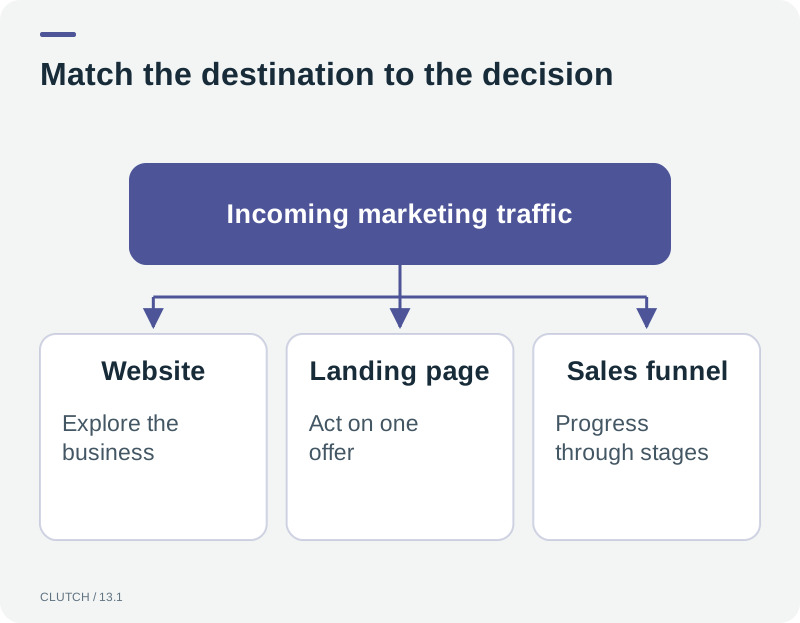
The right destination for your traffic depends on source, intent, awareness, and the complexity of the offer.
The Traffic Destination Matrix
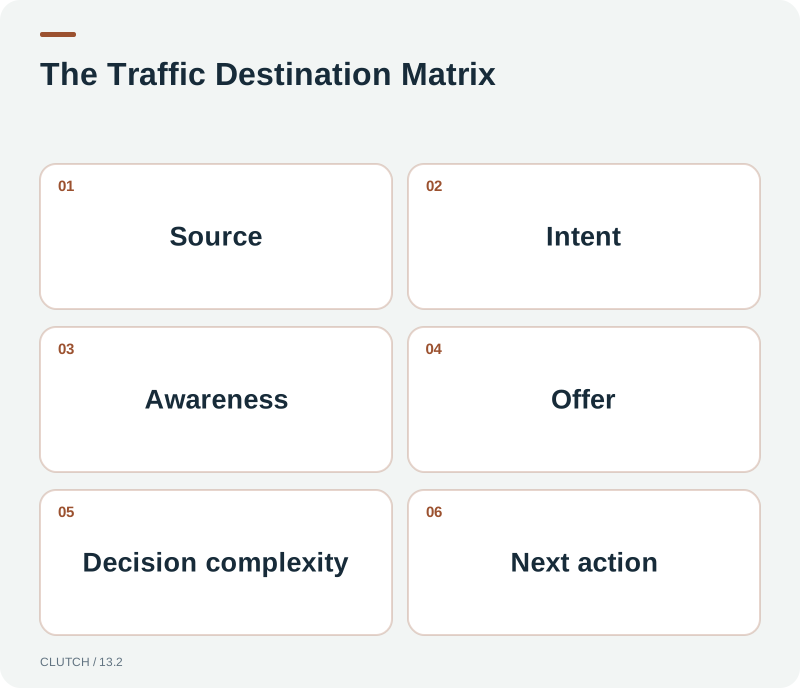
Clutch uses a six-factor framework called the Traffic Destination Matrix to determine where traffic should go. Each factor narrows the decision toward the correct architecture. Skipping this analysis and defaulting to a homepage for everything, or a landing page for everything, produces avoidable conversion loss.
The Traffic Destination Matrix evaluates source, intent, awareness, offer, decision complexity, and next action.
1. Source
Where the visitor came from determines how much context they already have. A Google Ads click from a keyword like emergency AC repair signals high intent and a specific need. A social media ad click from a broad interest audience signals curiosity but not necessarily urgency. An email click from an existing subscriber signals some level of trust. An organic search click from a research query signals an information need. Each source carries a different amount of built-in context, and the destination should account for that.
2. Intent
What is the visitor trying to accomplish? Are they researching a problem, comparing solutions, looking for a specific service, or ready to book or buy? Research intent supports a website or educational content. Comparison intent supports a detailed landing page or decision guide. Transactional intent supports a focused landing page or funnel entry. Matching the destination to the intent reduces friction and wasted clicks.
3. Awareness
How familiar is the visitor with the problem, the solution, and the company? A cold audience from a social ad needs more context and trust-building than a warm referral or a branded search. Low awareness benefits from a website or a funnel that educates progressively. High awareness can go directly to a focused offer page without the same level of preamble.
4. Offer
Is there one specific offer or multiple services? A single offer, like a seasonal discount or a specific service promotion, works well on a dedicated landing page. Multiple services, like a law firm with several practice areas, require a website or a hub page that lets visitors find the right service. Forcing multiple services onto a single landing page creates confusion and dilutes conversion.
5. Decision Complexity
How much information does the visitor need before converting? A low-complexity decision, like booking a haircut, needs minimal information and a clear booking button. A high-complexity decision, like hiring a law firm for a specific case, needs practice area pages, attorney profiles, testimonials, FAQs, and a consultation request. The more complex the decision, the more the destination needs to support research and comparison.
6. Next Action
What should the visitor do after consuming the page? Call, book, submit a form, download a resource, buy a product, or explore more pages? The destination should make the next action obvious and frictionless. A landing page with one call to action outperforms a homepage with twelve links when the objective is a single conversion action. A website with clear navigation outperforms a landing page when the objective is exploration and self-qualification.
When to Send Traffic to a Website
A website is the right destination when visitors are researching broadly, when multiple services matter, when brand credibility is part of the decision, and when organic discovery is the primary traffic source. Websites support SEO because they contain the depth of content, internal linking, and topical coverage that search engines reward. A website also serves as the foundation that landing pages and funnels are built on top of.
Organic search traffic generally belongs on a website. A visitor searching for HVAC services in their area may need to explore repair, maintenance, installation, and emergency service options before deciding. Sending them to a single landing page for one service when they have not yet determined which service they need creates friction. The website lets them self-qualify by navigating to the right page.
When to Send Traffic to a Landing Page
A landing page is the right destination when one campaign has one primary offer, when message match between the ad and the page matters, and when distractions should be minimized. Paid traffic benefits from landing pages because the ad already established the context, and the landing page should reinforce that specific context rather than presenting the full website.
If a Google Ad targets the keyword emergency plumbing repair, the landing page should be about emergency plumbing repair, not the plumbing company homepage. The headline should match the ad. The offer should be relevant. The call to action should be immediate. Navigation should be minimal or removed entirely. Every element on the page should serve the single conversion goal that the ad set up.
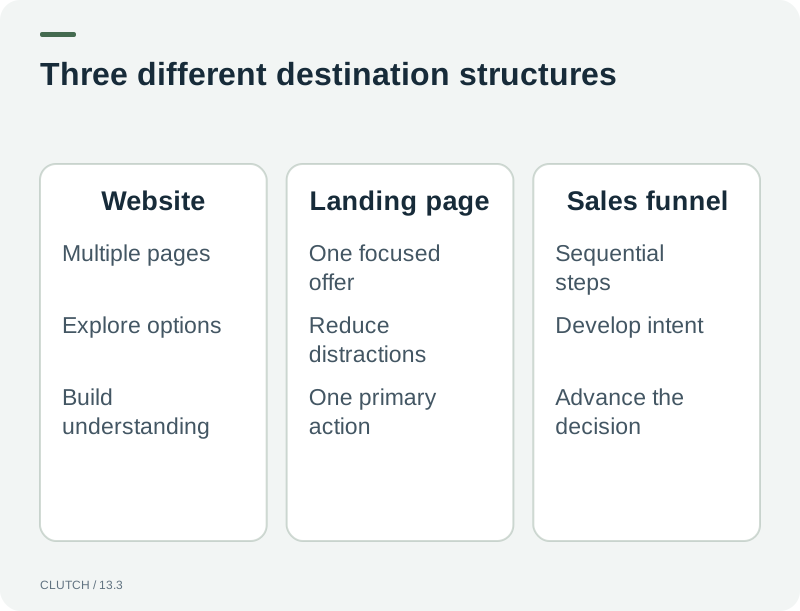
Websites support exploration. Landing pages focus on one conversion. Funnels guide sequential progression.
When to Use a Sales Funnel
A sales funnel is the right destination when the prospect needs multiple sequential steps before converting, when qualification should occur before a sales conversation, when lead magnets are involved, or when upsells and downsells are part of the revenue model. Funnels guide the visitor through a structured journey rather than presenting everything at once.
A law firm might use a funnel that starts with a free guide download, follows up with an email sequence that addresses common questions, offers a consultation booking at the right stage, and includes an upsell to a paid consultation or expanded service. A B2B company might use a funnel that starts with a webinar registration, progresses to a discovery call, and ends with a proposal. The funnel architecture ensures that each step is delivered at the right time, in the right order, with the right information.
Funnels can exist inside a website. A website can contain funnel pages, landing pages, and progressive content sequences without being replaced by them. The distinction is architectural. A landing page is a single page. A funnel is a connected sequence. A website is the container that can hold both.
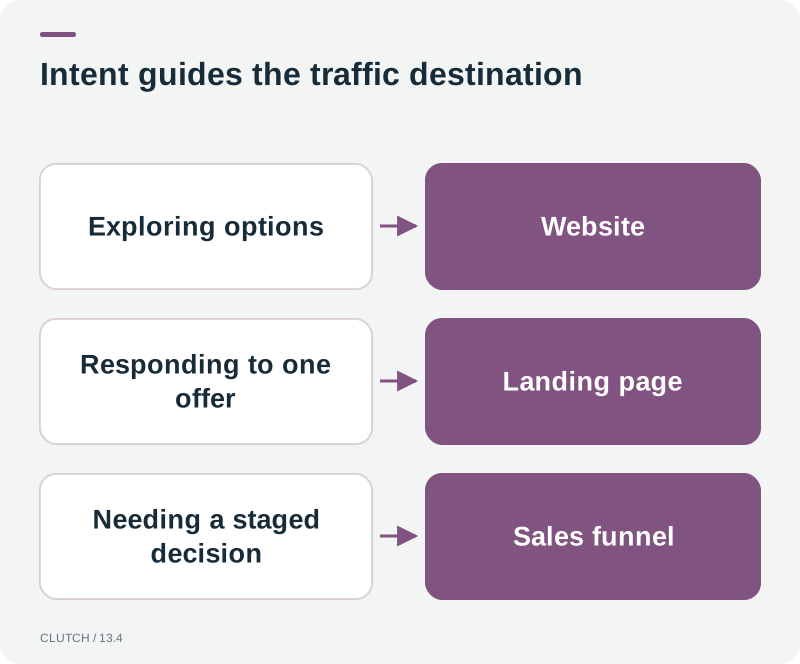
Different traffic sources carry different intent. The destination should match the intent of the source.
Comparison Table: Website vs. Landing Page vs. Sales Funnel
Attribute
Website
Landing Page
Sales Funnel
Purpose
Full business presence and exploration
Single offer, single conversion action
Guided sequential buyer journey
Navigation
Full menu with multiple pages
Minimal or no navigation
Progressive steps, controlled flow
Best Traffic Source
Organic search, direct, referral
Paid ads, email campaigns, social
Paid ads, email sequences, lead magnets
Number of Offers
Multiple services and resources
One focused offer
One core offer with potential upsells
Conversion Goal
Explore, self-qualify, contact
One action: call, form, buy, book
Progress through stages to purchase
SEO Value
High, supports organic rankings
Limited, can rank for specific terms
Low, typically not indexed or thin
Paid Ads Use
Often too broad for focused campaigns
Ideal for focused ad campaigns
Ideal for multi-step lead generation
Content Depth
Deep, multiple pages and topics
Focused on one offer and objection set
Progressive, revealed step by step
Tracking
Page-level and journey analytics
Single conversion event tracking
Step-by-step funnel drop-off tracking
Best Use Case
Broad discovery, brand building, SEO
Specific campaigns, ad destinations
Complex sales, qualification, upsells
Should Google Ads Go to a Homepage?
Usually not, unless the campaign is branded and the searcher is already looking for the company by name. For non-branded, service-specific keywords, a dedicated landing page that matches the ad's message will almost always convert better than a homepage. The homepage gives the visitor too many options and too little specificity. A landing page that says the same thing as the ad, addresses the same need, and presents one clear next step removes the gap between the ad click and the conversion action.
Should Meta Ads Use a Landing Page?
Meta and social advertising generally benefits from landing pages, but the landing page should account for the lower intent of social traffic. Social ad clicks often come from audiences who were not actively searching for the service. The landing page needs to do more education and trust-building than a search ad landing page. It may need social proof, a clearer explanation of the problem, and a lower-friction conversion action like downloading a guide before asking for a consultation.
Can Landing Pages Rank Organically?
Yes, but with limitations. A landing page can rank for specific, targeted keywords if it has enough content depth, quality, and supporting signals. However, a single thin page with minimal content and no internal linking will struggle to compete with a full website that covers the topic comprehensively. For organic search, a website with service pages, supporting articles, and topical depth will generally outperform isolated landing pages. Landing pages are best treated as paid traffic destinations, with organic traffic routed to the website's service pages.
When Should a Campaign Use Multiple Landing Pages?
When a campaign targets different services, different audiences, or different geographic areas, each segment should get its own landing page. A plumbing company running ads for both emergency repair and water heater installation should send each keyword group to a different page. Sending both to the same generic page reduces message match and conversion rate. The cost of building multiple landing pages is usually far less than the cost of sending high-intent traffic to a generic destination that does not address the specific need.
Traffic Destination Decision Checklist
What source is the traffic coming from? Search, paid, social, email, or referral?
What intent does that source carry? Research, comparison, or transactional?
How aware is the audience? Cold, warm, or hot?
Is there one offer or multiple services to present?
How much information does the visitor need before converting?
What is the single next action the visitor should take?
Does the visitor need a guided sequence or a self-directed exploration?
Is the traffic paid or organic? Paid favors focused pages. Organic favors depth.
Frequently Asked Questions
Frequently Asked Questions
Should Google Ads go to a homepage or a landing page?
For service-specific, non-branded keywords, a dedicated landing page that matches the ad message will almost always convert better than a homepage. Homepages present too many options and lack the message match that drives conversion from paid traffic. Branded campaigns, where someone searches for the company by name, can go to the homepage because the visitor already knows what they want.
Can a landing page rank in organic search?
A landing page can rank for specific targeted keywords if it has enough content depth and quality. However, a thin single page will generally struggle against a full website with comprehensive topical coverage. Landing pages are best treated as paid traffic destinations, while organic search traffic should go to the website's service and content pages that have more depth and internal linking.
Should landing pages have navigation?
For paid traffic landing pages, navigation should be minimal or removed entirely. The goal is to focus the visitor on one conversion action without distraction. For organic traffic pages that also serve as entry points, some navigation may be appropriate to allow exploration. The rule is: if the page is a paid ad destination, remove distractions. If the page is an organic entry point, allow measured exploration.
How long should a landing page be?
Long enough to address every objection the visitor might have before converting, and no longer. A landing page for a simple offer might be one screen. A landing page for a high-ticket service might be several screens with testimonials, process explanations, FAQs, and trust signals. The length should follow the complexity of the decision, not an arbitrary template.
Can one website contain sales funnels?
Yes. A website can contain funnel pages, landing pages, and progressive content sequences. A funnel is an architectural concept, not a separate platform. A website can host a funnel that guides visitors through multiple steps while also serving as the broader container for service pages, resources, and organic content. The two are not mutually exclusive.
What is message match and why does it matter?
Message match is the alignment between what an ad promises and what the destination page delivers. When a Google Ad says emergency plumbing repair, the landing page should say emergency plumbing repair. Poor message match creates a disconnect that reduces trust and conversion. Strong message match reassures the visitor they are in the right place and moves them toward the action the ad intended.
Should I send social ad traffic to a landing page or a website?
Social ad traffic generally benefits from a landing page, but one that accounts for the lower intent of social clicks. Social audiences were not actively searching, so the landing page needs more education and trust-building than a search ad landing page. A lower-friction conversion action like downloading a guide may work better than immediately asking for a consultation.
How should conversions be tracked across destinations?
Each destination should have its own conversion event defined in analytics. Landing pages track a single primary action. Funnels track drop-off at each step. Websites track page-level engagement and form submissions across multiple service pages. Use call tracking for phone conversions, form tracking for submissions, and CRM integration to connect conversions back to revenue. Without tracking, you cannot determine which destination is producing the best return.
Determine whether your traffic should go to a website, a landing page, or a dedicated conversion funnel.
Sending the wrong traffic to the wrong destination is one of the most common and most expensive mistakes in digital marketing. Clutch Digital Development helps businesses match traffic sources to the right conversion architecture so that every click has the best possible chance of becoming a lead, appointment, or sale.
Tags:#landing page vs website#landing page vs sales funnel#website vs funnel#sales funnel vs website#landing page for Google Ads#landing page for Facebook Ads#high converting landing page#landing page conversion
READY TO PUT AI TO WORK?
What Could an AI Sales Agent Do for Your Business?
Every business handles leads differently. We'll look at your current sales process, lead volume, response times, follow-up, staffing, and opportunities to determine where an AI Sales Agent could have the biggest impact.
A high-converting website is not a digital brochure. Learn the Revenue Website Stack, the seven layers that determine whether your site turns traffic into leads, appointments, and sales.
A website that looks acceptable can still be quietly losing leads through structural problems, technical gaps, and conversion friction. Use the Website Problem Severity Scale to diagnose what needs fixing.
Good architecture helps users navigate, search engines crawl, and AI systems understand relationships between your content. Learn the Clutch Site Authority Pyramid and how to structure your site.