Home/Blogs & Insights/Smart Websites vs. Traditional Websites: Why the Next Generation of Websites Will Do More Than Display Information
Web Development
Smart Websites vs. Traditional Websites: Why the Next Generation of Websites Will Do More Than Display Information
A Smart Website is connected to the systems that handle lead capture, qualification, routing, follow-up, and measurement. Learn the six capabilities that separate it from a traditional brochure site.
Vince Beekel
Jul 10, 202612 min read
Table of Contents
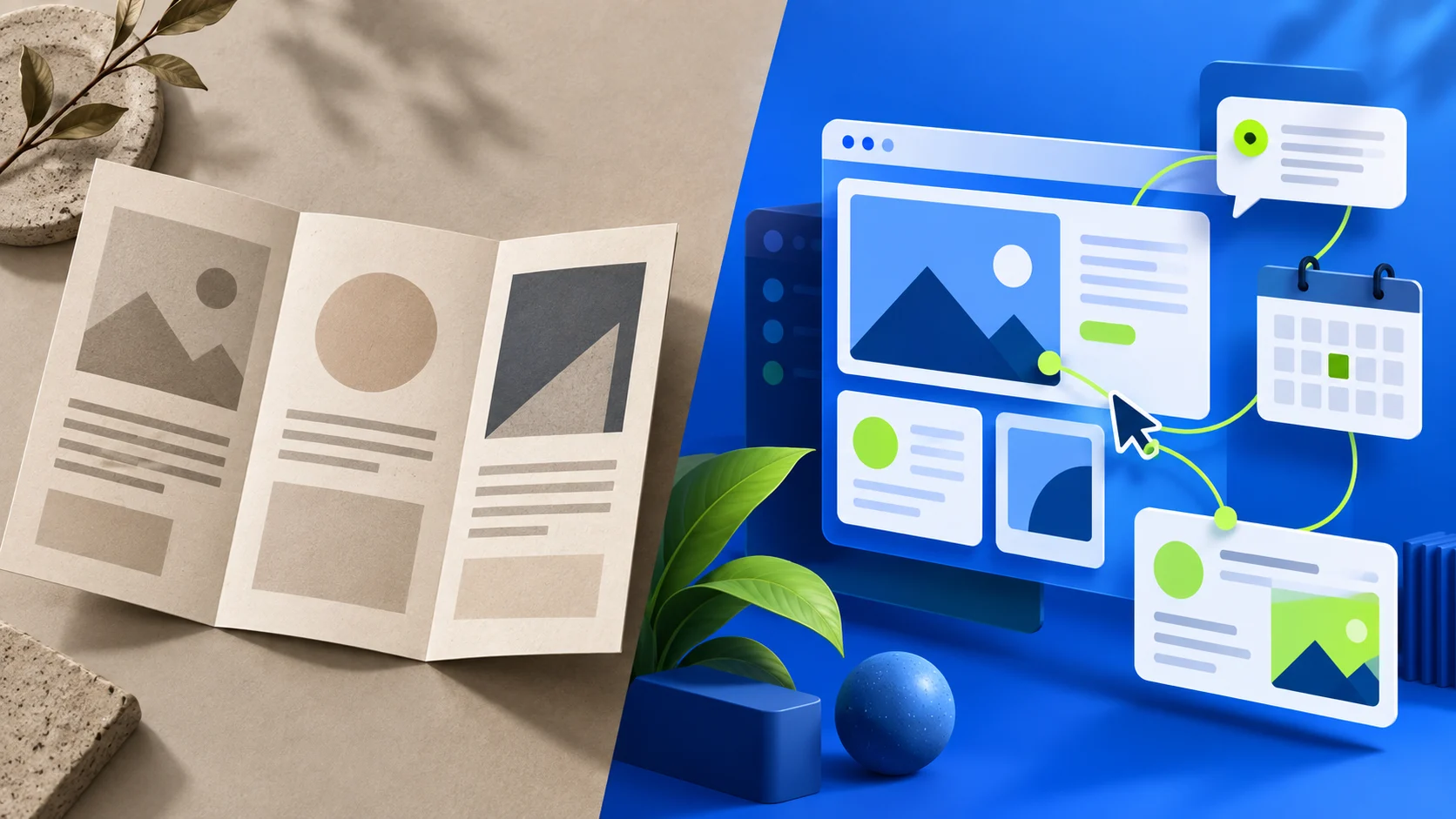
For most of the history of the web, a website has been a digital brochure. It displayed information about a company, listed services, showed contact details, and waited for visitors to call or email. The website was a passive participant in the sales process. It existed to be read, not to act.
That model is becoming inadequate for businesses that depend on lead generation, sales follow-up, and measurable growth. A website can now be connected to the systems that handle lead capture, qualification, communication, automation, data, and sales follow-up. When those connections exist, the website stops being a brochure and starts functioning as an active participant in the revenue process. Clutch calls this a Smart Website.
This article defines what a Smart Website is, how it differs from a traditional website, and whether your business needs one. For the broader framework of how websites connect to discovery and measurement, read our guide to Multi-Engine Optimization. For the conversion infrastructure that makes a website generate revenue, see our article on high-converting websites.
What Is a Smart Website?
A Smart Website is a website connected to the systems responsible for lead capture, qualification, communication, automation, data, sales follow-up, and measurement. It is not defined by a single technology. It is defined by its connections. A traditional website displays information and relies on a human to manually handle every interaction that follows. A Smart Website captures, routes, responds, and follows up through integrated systems that reduce manual work and shorten the time between interest and action.
The distinction matters because the value of a website is increasingly determined by what happens after the visit, not just what the visitor sees. A website that captures a lead and immediately routes it to the right salesperson, triggers an automated response, qualifies the prospect, and books an appointment is more valuable than a website that captures the same lead and leaves it in an inbox.
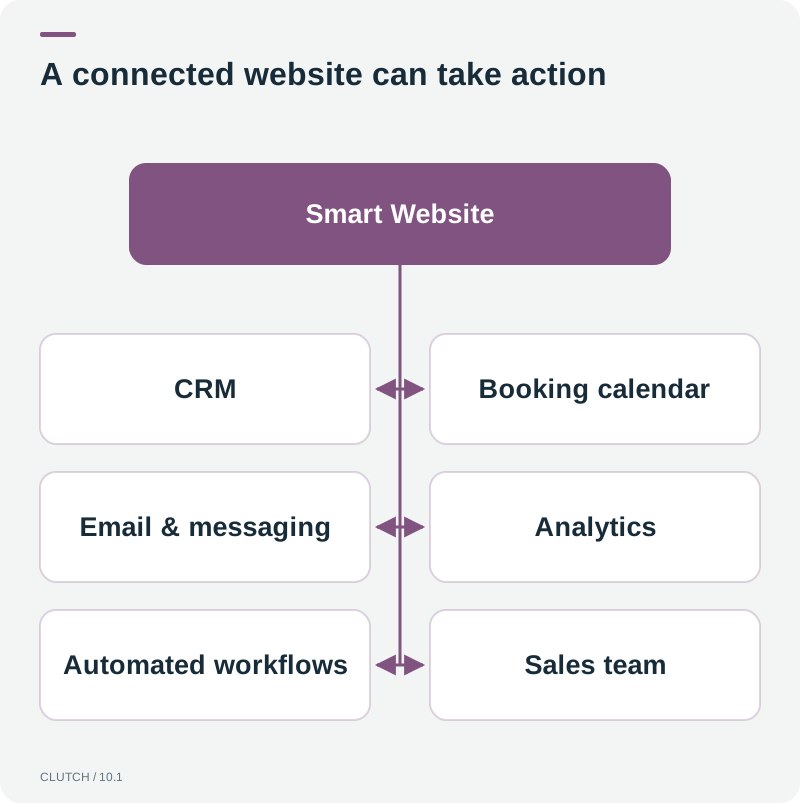
A Smart Website connects to CRM, calendar, communication, analytics, and automation systems to participate actively in the sales process.
The Six Capabilities of a Smart Website
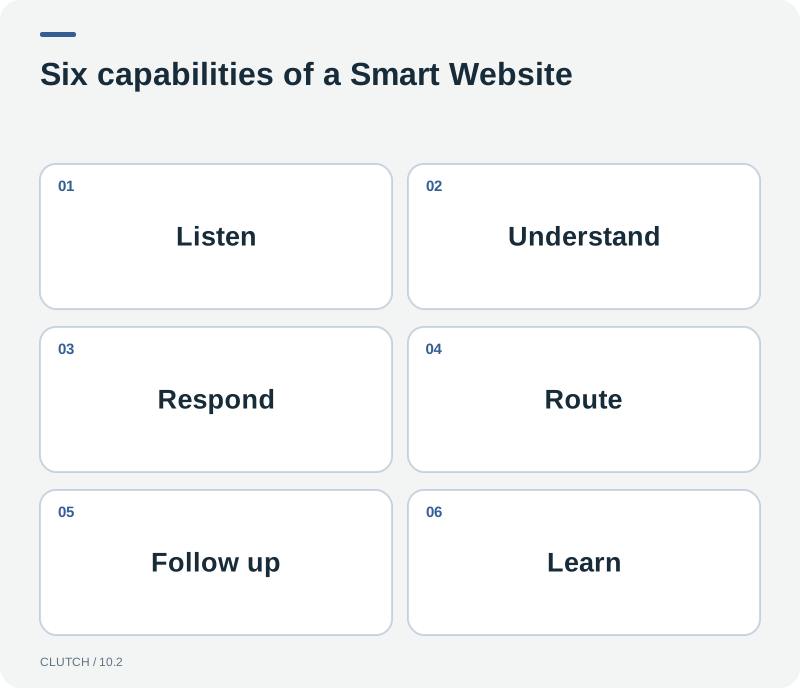
Clutch defines a Smart Website by six capabilities. Each capability represents a function that a traditional website cannot perform without human intervention. Together, they transform a website from a display surface into an operating layer for sales and marketing.
The Six Capabilities of a Smart Website: listen, understand, respond, route, follow up, and learn.
1. Listen
A Smart Website captures visitor behavior, form inputs, call data, chat interactions, and engagement signals. It tracks which pages a visitor views, which services they show interest in, where they came from, and how they interact with the site. This data feeds into the systems that use it to qualify, route, and respond. A traditional website records this data in an analytics tool that a human reviews later. A Smart Website uses it in real time to shape the visitor's experience and the sales team's response.
2. Understand
A Smart Website identifies intent, service interest, geographic location, source, and qualification data where appropriate. It can determine that a visitor who arrived from a search for HVAC repair and viewed the repair page is likely a service prospect, not a browser. This understanding enables dynamic content, personalized messaging, and intelligent routing. A traditional website treats every visitor identically because it has no mechanism to differentiate them.
3. Respond
A Smart Website provides relevant information through pages, chat, AI assistants, or automated sequences. It can answer common questions through an integrated AI chat, present service-specific information based on what the visitor viewed, or trigger a personalized email sequence based on the form they submitted. The response is contextual and immediate. A traditional website responds the same way to every visitor: by displaying the same static content regardless of intent or behavior.
4. Route
A Smart Website sends leads to the right calendar, salesperson, pipeline, workflow, or department based on the information captured. A visitor requesting a consultation about commercial HVAC gets routed to the commercial sales rep. A visitor requesting residential service gets routed to the residential team. A lead from a specific service area gets assigned to the rep covering that territory. Routing happens automatically based on rules that match your sales process. A traditional website sends every form submission to the same inbox for manual sorting.
5. Follow Up
A Smart Website connects into email, SMS, CRM, AI agents, and nurturing sequences. When a lead is captured, the follow-up begins immediately, not when a human remembers to check. An automated email confirms the submission. A text message provides the next step. An AI Sales Agent can call the lead within minutes to qualify and book. Nurturing sequences keep the prospect engaged over time. A traditional website captures the lead and waits for a human to initiate contact, which often happens hours later when the prospect's interest has cooled.
6. Learn
A Smart Website uses analytics and performance data to improve the customer journey. It tracks which pages convert, which forms produce qualified leads, which traffic sources generate revenue, and where visitors drop off. This data feeds back into the site's design, content, and automation rules so that the system improves over time. A traditional website generates analytics data that a human reviews periodically and acts on manually, if at all.
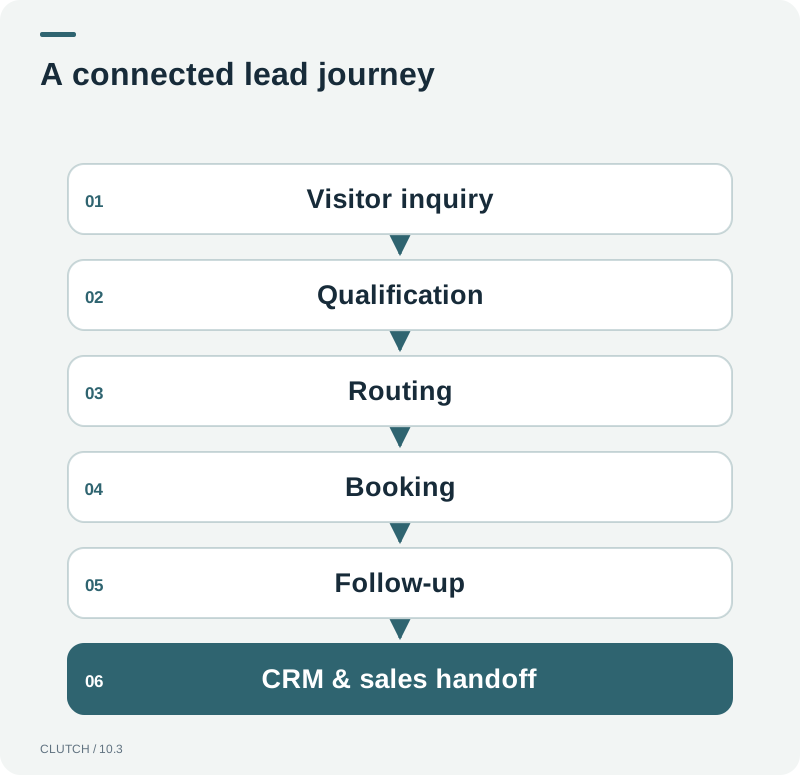
The Smart Website lead journey: each stage is automated and connected, reducing the time between interest and action.
Traditional Website vs. Smart Website
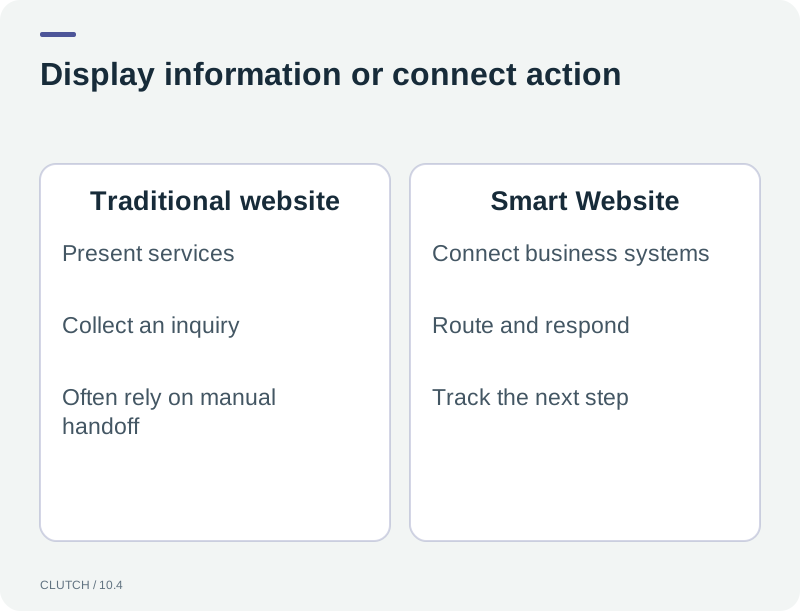
The comparison is not about technology for its own sake. It is about what the website can do for the business. A traditional website answers the question, what does the company do? A Smart Website answers that question and also handles what comes next: qualifying, routing, following up, and measuring.
Traditional websites display information. Smart Websites participate in the sales process through connected systems.
Capability
Traditional Website
Smart Website
Information Display
Static pages with fixed content
Dynamic content based on visitor behavior and source
Lead Capture
Forms send to email for manual processing
Forms trigger immediate routing and automated response
CRM Integration
None or manual data entry
Automatic lead creation, tagging, and pipeline assignment
Appointment Booking
Phone tag or manual scheduling
Integrated calendar with real-time availability
AI Chat or Voice
Not present
Available for qualification, FAQ, and booking
Lead Qualification
Manual review of form submissions
Automated scoring and routing based on captured data
Personalization
Same content for every visitor
Content and messaging adapt to visitor signals
Automation
None
Email, SMS, and workflow sequences triggered by actions
Analytics
Basic page view tracking
Conversion, attribution, and revenue tracking connected to CRM
Sales Follow-Up
Human initiates when available
Automated immediate response with human escalation
Data Collection
Form submissions only
Behavioral, engagement, and first-party data captured continuously
Integrations
None or minimal
CRM, calendar, SMS, email, call tracking, and AI agents
Does Every Business Need a Smart Website?
Not every business needs every capability. A small business with low lead volume and a simple sales process may function adequately with a traditional website and manual follow-up. The question is not whether a business needs a Smart Website in theory but whether the cost of manual processing, slow response, and missed follow-up is greater than the cost of building the connections.
Businesses that benefit most are those where lead volume is high enough that manual processing creates bottlenecks, where speed to lead affects conversion, where the sales process involves qualification and routing, or where the cost of a missed lead is significant. Home service businesses, law firms, healthcare practices, financial services, and B2B companies with multi-step sales processes all tend to benefit because the gap between a traditional website and a Smart Website directly affects revenue.
How Is a Smart Website Different From a Marketing Automation Platform?
A marketing automation platform manages email sequences, lead scoring, and nurturing campaigns. It is a tool that operates separately from the website. A Smart Website integrates marketing automation but also handles lead capture, routing, booking, AI interaction, and CRM synchronization at the website level. The website is not just a trigger for the automation platform. It is part of the automation system itself.
The practical distinction is that a marketing automation platform starts working after a lead is captured and imported. A Smart Website starts working the moment a visitor arrives, because the site itself is connected to the qualification, routing, and response systems. The website is the first touchpoint in the automation, not just the source of data for a separate system to process.
Does a Smart Website Replace a CRM?
No. A Smart Website connects to a CRM and feeds it data, but it does not replace the CRM's function of managing relationships, pipelines, and customer communications over time. The CRM remains the system of record for customer data. The Smart Website is the front end that captures, qualifies, and routes leads into the CRM with more structure and context than a form-to-email workflow provides.
Can an Existing Website Become Smart?
Often, yes. A website does not necessarily need a full rebuild to gain Smart Website capabilities. Adding CRM integration, call tracking, form-to-pipeline routing, calendar booking, and AI chat can transform a traditional site into a connected one without rebuilding the design. The question is whether the existing site's technical foundation supports integrations cleanly or whether the architecture is too rigid to connect without significant modification.
The decision depends on the current site's structure, the cost of integration versus rebuild, and the value of the capabilities to the business. For some businesses, adding integrations to an existing site delivers 80 percent of the value at 20 percent of the cost. For others, the existing architecture is too constrained to support the connections needed, and a rebuild is more practical. Our article on 12 signs your website is costing you leads can help you evaluate which situation applies.
How Does AI Fit Into a Smart Website?
AI fits into a Smart Website in several practical ways. AI chat can handle qualification conversations on the site, asking questions that determine whether a prospect fits the business's criteria before involving a human. AI voice agents can handle inbound calls and outbound follow-up, qualifying leads and booking appointments. AI can personalize content based on visitor signals, showing relevant services or case studies based on the visitor's behavior. AI can also draft follow-up communications based on the context of the interaction, reducing the manual work of personalized outreach.
The key is that AI handles the repetitive, high-volume, time-sensitive parts of the process, while humans handle the complex, high-value, relationship-building parts. AI is not replacing the sales team. It is handling the work that the sales team does not have time to do consistently, like responding within minutes to every inbound lead at any hour.
What Integrations Are Most Useful?
The most useful integrations depend on the business, but the core set that delivers the most value across industries includes CRM integration for lead management, calendar integration for appointment booking, SMS integration for text follow-up, email integration for automated sequences, call tracking for phone attribution, and AI chat or voice for qualification and response. Together, these integrations create a system where a lead is captured, routed, responded to, and followed up without manual intervention at each step.
The specific tools matter less than the connections. A CRM that your team already uses is more valuable than a theoretically superior CRM that no one adopts. The goal is not to assemble the most sophisticated tech stack but to create the connections that reduce the time and friction between a visitor's interest and a sales conversation.
How Much Automation Is Too Much?
Automation should handle the processes that benefit from speed, consistency, and volume. It should not handle the processes that require judgment, relationship-building, or complex decision-making. The line is not between automation and human work. It is between repetitive tasks that automation does better and nuanced tasks that humans do better.
A practical guideline: automate the first response, the qualification questions, the scheduling, the confirmation, and the nurturing follow-up. Keep the consultation, the proposal, the negotiation, and the close human. The automation ensures that the human conversations happen with qualified, interested, properly prepared prospects rather than with every inbound form submission regardless of quality.
What Should Remain Human?
The parts of the process that involve trust, judgment, and relationship should remain human. The initial consultation where a prospect explains their situation and a representative assesses whether the company can help. The proposal conversation where pricing, scope, and expectations are negotiated. The close where the prospect decides to move forward. These are the conversations where a human presence builds the trust that automation cannot replicate. The Smart Website's role is to ensure that these conversations happen with the right prospects at the right time, not to replace them.
Use Cases Across Industries
The value of a Smart Website varies by industry because the sales processes, lead sources, and customer journeys differ. The following hypothetical examples illustrate how the capabilities apply. These are illustrative, not based on actual client data.
HVAC Company
A visitor searches for AC repair, lands on the site, and sees service-specific content based on their search query. They submit a form requesting service. The lead is automatically routed to the technician covering their area, a text confirms the request, and an AI agent calls to qualify the issue and book a service window. The CRM records the lead source, service type, and outcome. The follow-up sequence checks satisfaction after the service and nurtures the customer toward maintenance plan enrollment.
Law Firm
A visitor researching a legal issue lands on a practice area page. An AI chat asks qualifying questions about their situation to determine whether the case fits the firm's criteria. Qualified leads are routed to the appropriate attorney's calendar for a consultation. Unqualified leads receive an automated response explaining the firm cannot help and suggesting alternatives. The CRM tracks the case type, source, and consultation outcome, feeding data back to improve the site's content for the most common case types.
Physical Therapy Practice
A patient searches for a specific condition, lands on a treatment page, and books an initial evaluation through the integrated calendar. The booking triggers an automated intake email with forms and instructions. A reminder text goes out the day before. After the visit, a follow-up sequence requests a review and checks progress. The CRM tracks patient source, treatment type, and outcomes, which informs decisions about which conditions to feature on the website.
B2B Service Provider
A decision-maker researches solutions, visits the site multiple times, and downloads a guide. The CRM scores the lead based on engagement and routes it to the appropriate sales rep based on company size and industry. An email sequence nurtures the lead with relevant case studies. When the lead reaches a threshold score, an AI agent reaches out to book a discovery call. The entire journey is tracked from first visit to closed deal.
E-Commerce Brand
A shopper browses products, adds items to cart, and abandons checkout. The Smart Website captures the cart data and triggers an automated recovery email. The shopper returns, completes the purchase, and receives an order confirmation, shipping notification, and post-purchase follow-up sequence. The CRM tracks the customer's purchase history, enabling personalized product recommendations and retention campaigns. Behavioral data from the site informs which products to feature and which pages to optimize.
Frequently Asked Questions
Frequently Asked Questions
What makes a website smart?
A Smart Website is connected to the systems responsible for lead capture, qualification, communication, automation, data, sales follow-up, and measurement. It is not defined by a single technology but by its connections. The website actively participates in the sales process by capturing, routing, responding, and following up through integrated systems rather than displaying information and waiting for a human to handle every subsequent step.
Does every business need a Smart Website?
Not every business needs every capability. Businesses with high lead volume, multi-step sales processes, or significant costs from missed or slow follow-up benefit most. The question is whether the cost of manual processing and missed opportunities exceeds the cost of building the connections. Small businesses with simple sales processes and low lead volume may function adequately with a traditional website and manual follow-up.
Can my existing website become a Smart Website?
Often, yes. Adding CRM integration, call tracking, form routing, calendar booking, and AI chat can transform a traditional site into a connected one without a full rebuild. The question is whether the existing site's technical foundation supports integrations cleanly or whether the architecture is too rigid. For some businesses, adding integrations delivers most of the value at a fraction of the cost.
Does a Smart Website replace a CRM?
No. A Smart Website connects to a CRM and feeds it structured data, but it does not replace the CRM's function of managing relationships and pipelines over time. The CRM remains the system of record. The Smart Website is the front end that captures, qualifies, and routes leads into the CRM with more context than a form-to-email workflow provides.
How is a Smart Website different from marketing automation?
A marketing automation platform manages email sequences and lead scoring separately from the website. A Smart Website integrates those functions and also handles lead capture, routing, booking, AI interaction, and CRM synchronization at the website level. The website is the first touchpoint in the automation system, not just the source of data for a separate platform to process.
What integrations are most valuable for a Smart Website?
The core set includes CRM integration for lead management, calendar integration for booking, SMS for text follow-up, email for automated sequences, call tracking for phone attribution, and AI chat or voice for qualification. The specific tools matter less than the connections they create. The goal is reducing time and friction between a visitor's interest and a sales conversation.
How much of the sales process should be automated?
Automate the processes that benefit from speed, consistency, and volume: first response, qualification, scheduling, confirmation, and nurturing. Keep the consultation, proposal, negotiation, and close human. The line is between repetitive tasks that automation does better and nuanced tasks that humans do better. The automation ensures human conversations happen with qualified, prepared prospects.
Can AI chat handle complex customer questions?
AI chat can handle qualification questions, FAQs, scheduling, and routing. It can also answer common questions based on training data from your services and processes. For complex, judgment-based questions, AI can gather context and route to a human with the information already captured. The AI handles the repetitive high-volume interactions while humans handle the nuanced, high-value conversations.
Explore how a Smart Website could connect your website, CRM, automation, and sales process.
A Smart Website is not a technology project. It is a revenue system that connects discovery, qualification, routing, follow-up, and measurement. Clutch Digital Development builds Smart Websites that turn a passive display surface into an active participant in your sales process.
What Could an AI Sales Agent Do for Your Business?
Every business handles leads differently. We'll look at your current sales process, lead volume, response times, follow-up, staffing, and opportunities to determine where an AI Sales Agent could have the biggest impact.
A high-converting website is not a digital brochure. Learn the Revenue Website Stack, the seven layers that determine whether your site turns traffic into leads, appointments, and sales.
A website that looks acceptable can still be quietly losing leads through structural problems, technical gaps, and conversion friction. Use the Website Problem Severity Scale to diagnose what needs fixing.