Home/Blogs & Insights/AI Receptionist vs. Human Receptionist vs. Answering Service: Cost, Performance and Customer Experience Compared
AI Automation
AI Receptionist vs. Human Receptionist vs. Answering Service: Cost, Performance and Customer Experience Compared
Each reception model has distinct advantages in availability, capability, and judgment. Learn the Reception Coverage Triangle and when a hybrid model makes the most sense.
Vince Beekel
May 29, 202613 min read
Table of Contents
Every missed call is a potential customer who went somewhere else. For service businesses, medical practices, law firms, and any company where phone inquiries are a primary lead source, the way calls are answered directly affects revenue. The options for handling those calls have expanded. A business can use an internal human receptionist, a third-party answering service, an AI receptionist, or a combination of all three.
Each option has distinct advantages and tradeoffs. This article compares AI receptionists, human receptionists, and answering services across cost, performance, and customer experience to help businesses determine the right approach for their situation. For the related concept of AI systems that handle sales conversations beyond reception, see our guide to what an AI Sales Agent is.
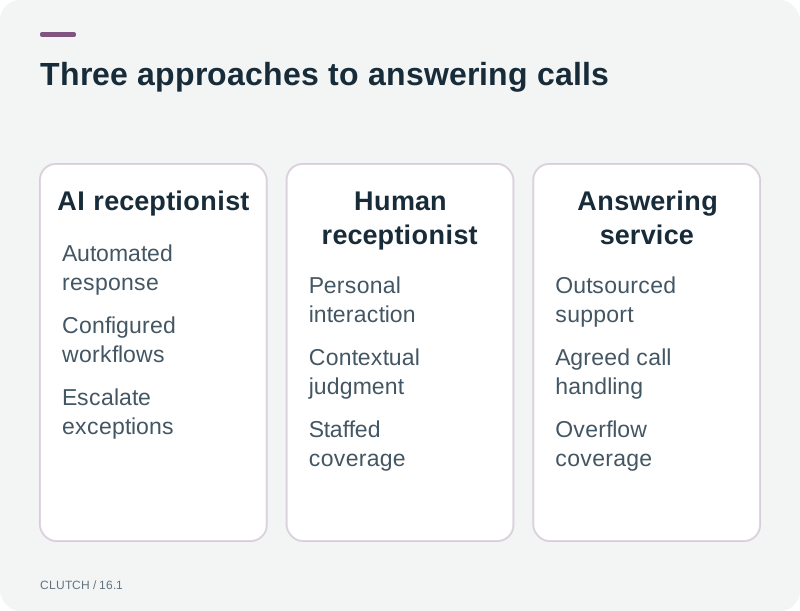
Three approaches to call handling, each with distinct advantages in availability, capability, and judgment.
What Are the Three Reception Models?
A human receptionist is an employee who answers calls during business hours, handles administrative tasks, greets visitors, routes calls, and represents the business in person. An answering service is a third-party company that answers calls on behalf of the business, typically taking messages and forwarding urgent calls. An AI receptionist is a software-based system that answers calls using voice technology, can handle multiple simultaneous calls, schedules appointments, answers common questions, and routes calls based on business rules.
The Reception Coverage Triangle
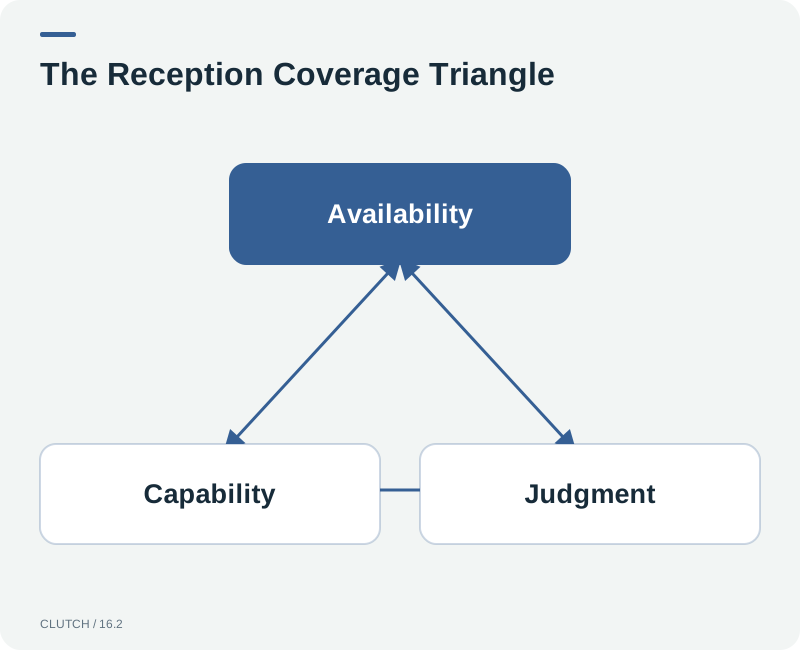
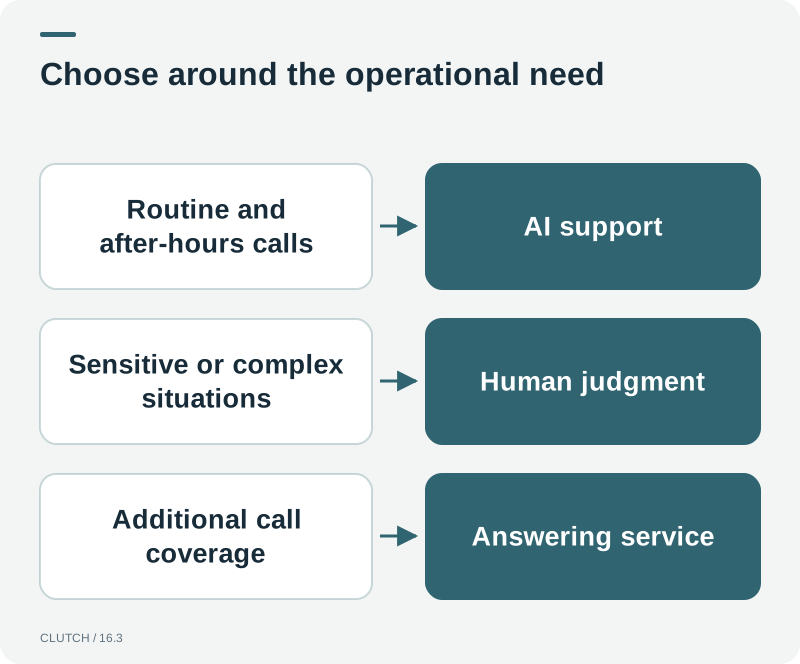
Clutch evaluates reception options using a three-dimensional framework called the Reception Coverage Triangle. Each dimension reveals where a model excels and where it falls short. No single option maximizes all three dimensions simultaneously, which is why many businesses end up with a hybrid approach.
The Reception Coverage Triangle evaluates availability, capability, and judgment to determine the right reception model.
1. Availability
When can calls actually be answered? A human receptionist is available during business hours but cannot answer calls outside those hours, during breaks, or when already on another call. An answering service may offer extended hours or 24/7 coverage but may have queue times during peak periods. An AI receptionist can answer every call simultaneously, 24 hours a day, with no queue and no busy signal. For businesses where after-hours calls represent lost revenue, availability is the most important dimension.
2. Capability
What can happen during the call? A human receptionist can answer questions, schedule appointments, handle complex requests, recognize callers by voice, and manage nuance. An answering service typically takes messages, captures basic information, and forwards calls, but does not schedule appointments or answer detailed questions. An AI receptionist, depending on the platform, can schedule appointments, answer common questions, qualify leads, and update CRM records, but operates within the boundaries of its configuration and knowledge base.
3. Judgment
How well can unusual, emotional, sensitive, or complex situations be handled? A human receptionist excels here. An upset caller, an emergency situation, a nuanced request, or a conversation that requires reading the room are all handled better by a person who can empathize, adapt, and make real-time decisions. An answering service has limited judgment because the operator does not know the business deeply. An AI receptionist follows configured rules and can route to a human when judgment is needed, but it cannot exercise judgment itself.
Comprehensive Comparison Table
Each model has strengths in different operational dimensions. The right choice depends on call volume, hours, and complexity.
Attribute
AI Receptionist
Human Receptionist
Answering Service
Availability
24/7, every call answered
Business hours only
Extended hours or 24/7, may queue
Concurrent Calls
Unlimited simultaneous
One at a time
Depends on staffing
Initial Cost
Software setup and configuration
Hiring, onboarding, training
Setup fee, monthly contract
Ongoing Cost Structure
Software usage, per-call or flat
Salary, benefits, overhead
Per-minute or per-call pricing
Training
Configuration and knowledge base
Weeks to months
Service trains their operators
Consistency
Always follows configured rules
Varies by person and day
Varies by operator
Appointment Booking
Yes, with calendar integration
Yes
Usually no, message taking only
Basic Qualification
Yes, asks approved questions
Yes, with judgment
Limited, takes basic info
CRM Updates
Yes, when integrated
Yes, but manually
No, sends messages only
Call Routing
Yes, based on rules
Yes, with judgment
Yes, forwards messages
Complex Situations
Limited, routes to human
Excellent, uses judgment
Limited, not business expert
Emotional Nuance
Limited
Excellent
Basic
After-Hours Coverage
Full 24/7
None unless overtime
Available, may cost extra
Scalability
Scales with software
Requires hiring more staff
Scales with service plan
Language Capabilities
Depends on platform
Depends on the person
Depends on operator
Customization
Configured to business rules
Trained, but individual
Scripted, limited flexibility
Human Judgment
No, follows rules
Yes, primary strength
Limited
Cost Structures Compared
Exact costs vary by provider, region, and business requirements, so this section discusses cost structures rather than specific dollar amounts. Businesses should request quotes from providers in their area for accurate pricing.
A human receptionist carries the highest total cost because the business pays salary, payroll taxes, benefits, paid time off, training, equipment, and management overhead. The cost is fixed regardless of call volume, which means the business pays the same whether the phone rings twice or two hundred times per day. The advantage is capability and judgment that no automated system or distant service can replicate.
An answering service typically charges a monthly base fee plus per-minute or per-call charges. The cost scales with usage, which means low-call businesses pay less than high-call businesses. The tradeoff is that the service takes messages rather than scheduling appointments, qualifying leads, or handling complex requests. The cost per call is lower than a human receptionist but the capability per call is also lower.
An AI receptionist typically charges a software subscription plus usage costs that may be per-call, per-minute, or flat rate depending on the platform. The cost is generally lower than a human receptionist and comparable to or lower than an answering service, while offering more capability than the answering service. The cost structure scales with usage without requiring additional headcount, which makes it cost-effective for businesses with high call volume or significant after-hours traffic.
When a Human Receptionist Makes Sense
A human receptionist is the right choice for businesses where the front desk is more than call answering. Medical practices where the receptionist handles patient intake, insurance verification, and in-person greeting. Professional firms where the receptionist manages client relationships and office coordination. Businesses where call volume is manageable during business hours and after-hours calls are rare. Environments where the human presence at the front desk is part of the client experience and the brand.
When an Answering Service Makes Sense
An answering service is the right choice for businesses that need basic after-hours coverage or overflow support without adding staff. If the primary need is message taking, ensuring no call goes completely unanswered, and forwarding urgent matters, an answering service can fill that gap at a lower cost than a full-time hire. The limitation is that the service captures messages rather than actively engaging, qualifying, or booking.
When an AI Receptionist Makes Sense
An AI receptionist is the right choice for businesses with high call volume, significant after-hours traffic, and a need for appointment booking and basic qualification at the point of contact. Home service businesses that receive emergency calls at all hours. Medical practices that want to book appointments rather than take messages. Law firms that want to qualify cases before consuming attorney time. Any business where missed calls equal lost revenue and where the most common calls involve scheduling, questions, and routing rather than complex negotiation.
When a Hybrid Model Makes Sense
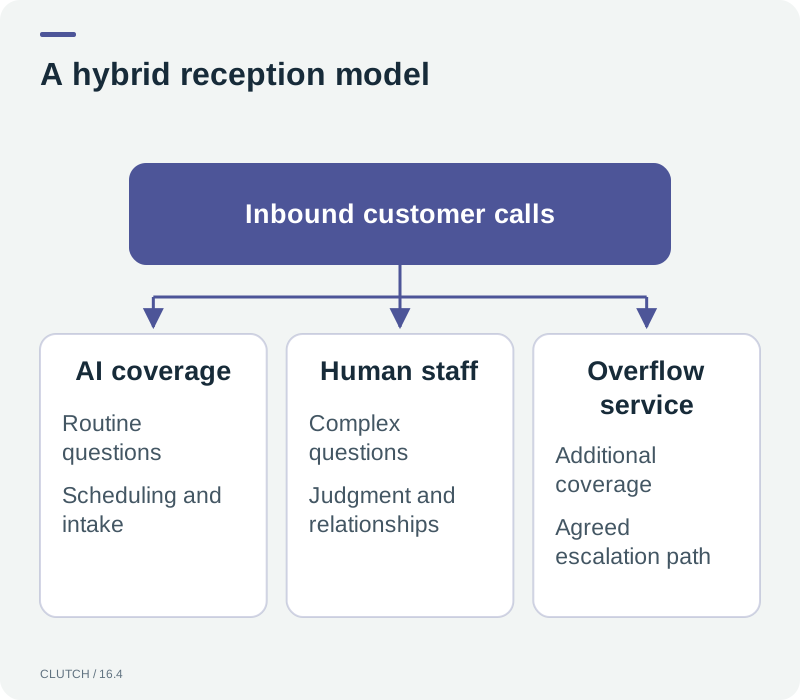
A hybrid model combines the strengths of each approach: AI for availability, humans for judgment, services for overflow.
For many businesses, the best answer is not one model but a combination. A human receptionist during business hours for the complex, in-person, relationship-building work, with an AI receptionist for after-hours coverage and overflow. Or an AI receptionist for initial qualification and booking with human escalation for anything that requires judgment. Or an answering service for basic message taking during low-traffic periods with an AI system for active engagement during peak hours.
The hybrid approach lets the business optimize each dimension of the Reception Coverage Triangle. AI handles availability. Humans handle judgment. The answering service or AI handles overflow. The business does not have to choose one model and accept its limitations. It can combine strengths and cover weaknesses.
What Happens With Difficult Calls?
Angry callers, emergency situations, and sensitive conversations require human judgment. An AI receptionist should be configured to recognize when a call exceeds its capability and route to a human immediately. An answering service operator should have clear escalation instructions. The system that handles these situations worst is one that tries to handle everything autonomously. The best system knows its limits and hands off appropriately.
For emergencies, the routing rules should be simple and reliable. If the caller indicates an emergency, the call goes to the on-call human immediately. For angry callers, the AI can acknowledge the frustration, apologize, and route to a manager. The key is that the system does not attempt to resolve situations that require human empathy and decision-making.
Reception Model Decision Scorecard
What is the call volume? High volume favors AI or hybrid. Low volume may suit a human.
What are the hours of operation? After-hours calls favor AI or answering service.
What needs to happen during the call? Booking and qualification favor AI. Message taking suits answering service. Complex handling needs human.
What is the cost tolerance? Fixed budget favors answering service. Investment in capability favors AI. Full capability needs human.
How important is judgment in the call? High judgment needs favor human. Low judgment needs can use AI or service.
Is after-hours coverage required? If yes, AI or answering service. If no, human may suffice.
Can the business integrate AI with its CRM and calendar? If yes, AI gains significant value.
Would a hybrid model cover more gaps than any single option? Often yes.
Frequently Asked Questions
Frequently Asked Questions
Can AI receptionists sound natural?
Voice AI technology has improved significantly, and modern AI receptionists can carry on natural-sounding conversations. The quality varies by platform, so businesses should listen to demos and test with real scenarios before launch. Some callers will still recognize they are speaking with an automated system, but the conversation should feel functional and professional rather than robotic and frustrating.
Can AI receptionists answer multiple calls simultaneously?
Yes. Unlike a human receptionist who can only handle one call at a time, an AI receptionist can answer every call simultaneously without queueing or busy signals. This is one of the strongest advantages for businesses with high call volume or peak periods where multiple calls arrive at once.
Can AI receptionists transfer calls to humans?
Yes, when properly configured. The AI can route calls to specific people, departments, or on-call staff based on the caller's needs and business rules. The handoff should include context so the human receiving the transfer knows what the call is about without asking the caller to repeat themselves.
Can AI receptionists schedule appointments?
Yes, when integrated with a calendar system. The AI can check availability, propose times, confirm bookings, and send confirmations. This is a significant advantage over answering services that only take messages, because the call results in a booked appointment rather than a callback queue.
What happens when the AI does not know the answer?
The AI should be configured to acknowledge when it does not know something and offer to route the question to a human or take a message. A well-designed system does not guess or provide incorrect information. It handles what it knows, escalates what it does not, and ensures the caller's question reaches someone who can answer it accurately.
Should customers be told they are speaking with AI?
Transparency is generally the better practice and may be required depending on the jurisdiction and applicable regulations. Disclosing that the caller is speaking with an automated system manages expectations and builds trust. Businesses should consult appropriate legal counsel regarding disclosure requirements for automated calling in their state and industry.
What should businesses test before launch?
Businesses should test common call scenarios, qualification questions, booking flows, escalation routing, CRM updates, after-hours behavior, and edge cases like angry callers or emergencies. Test with real phone calls, not just simulations, and listen to recordings to evaluate the experience from the caller's perspective. Fix issues before going live rather than discovering them with real customers.
How should customer experience be measured?
Track metrics like call answer rate, time to answer, booking conversion rate, call duration, caller satisfaction if measurable, escalation rate, and the number of calls that required human follow-up after the AI handled them. Compare these metrics against the previous system to determine whether the change improved or degraded the experience. Customer experience is measurable, not just a feeling.
Determine the right mix of AI, internal staff, and after-hours coverage for your inbound calls.
No single reception model is universally superior. The right approach depends on call volume, hours, complexity, and budget. Clutch Digital Development helps businesses evaluate their call handling needs and build a reception system that combines the strengths of AI, human staff, and services to cover every call effectively.
Tags:#AI receptionist vs human receptionist#AI receptionist vs answering service#AI receptionist#virtual receptionist#answering service#human receptionist#AI phone answering#24/7 receptionist
READY TO PUT AI TO WORK?
What Could an AI Sales Agent Do for Your Business?
Every business handles leads differently. We'll look at your current sales process, lead volume, response times, follow-up, staffing, and opportunities to determine where an AI Sales Agent could have the biggest impact.
A Smart Website is connected to the systems that handle lead capture, qualification, routing, follow-up, and measurement. Learn the six capabilities that separate it from a traditional brochure site.
An AI Sales Agent is a software-based sales system that responds, qualifies, educates, advances, and follows up. Learn the Five Jobs framework and whether it fits your business.